
Last updated November 16, 2026
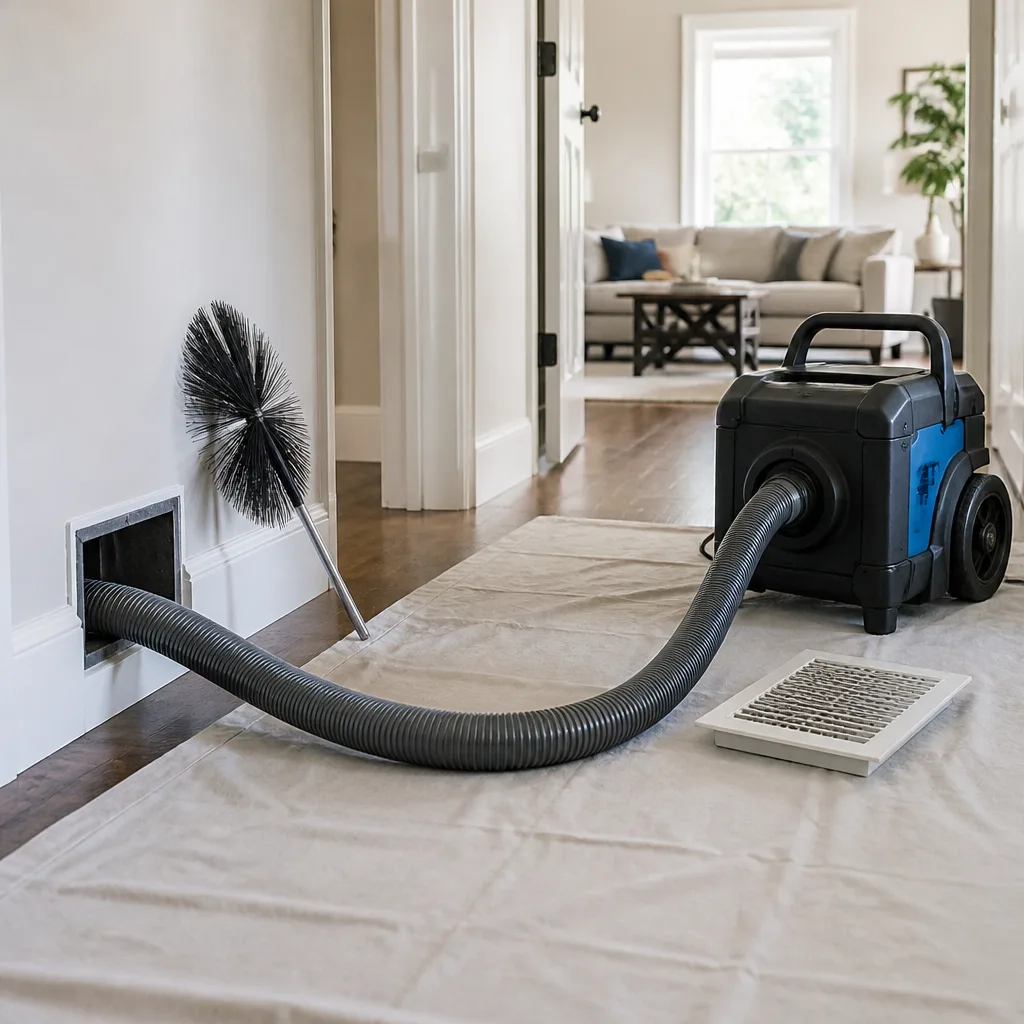 Whole-home duct cleaning
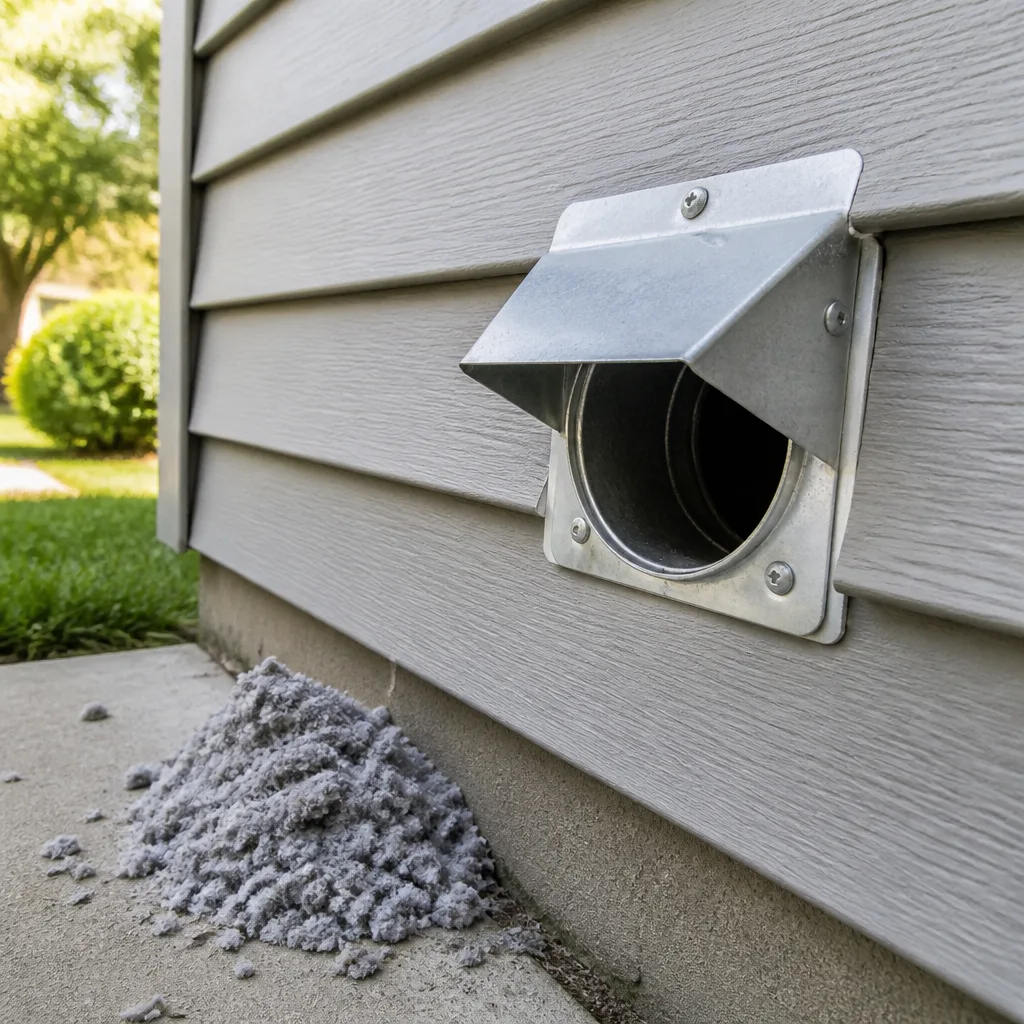 Dryer vent cleaning
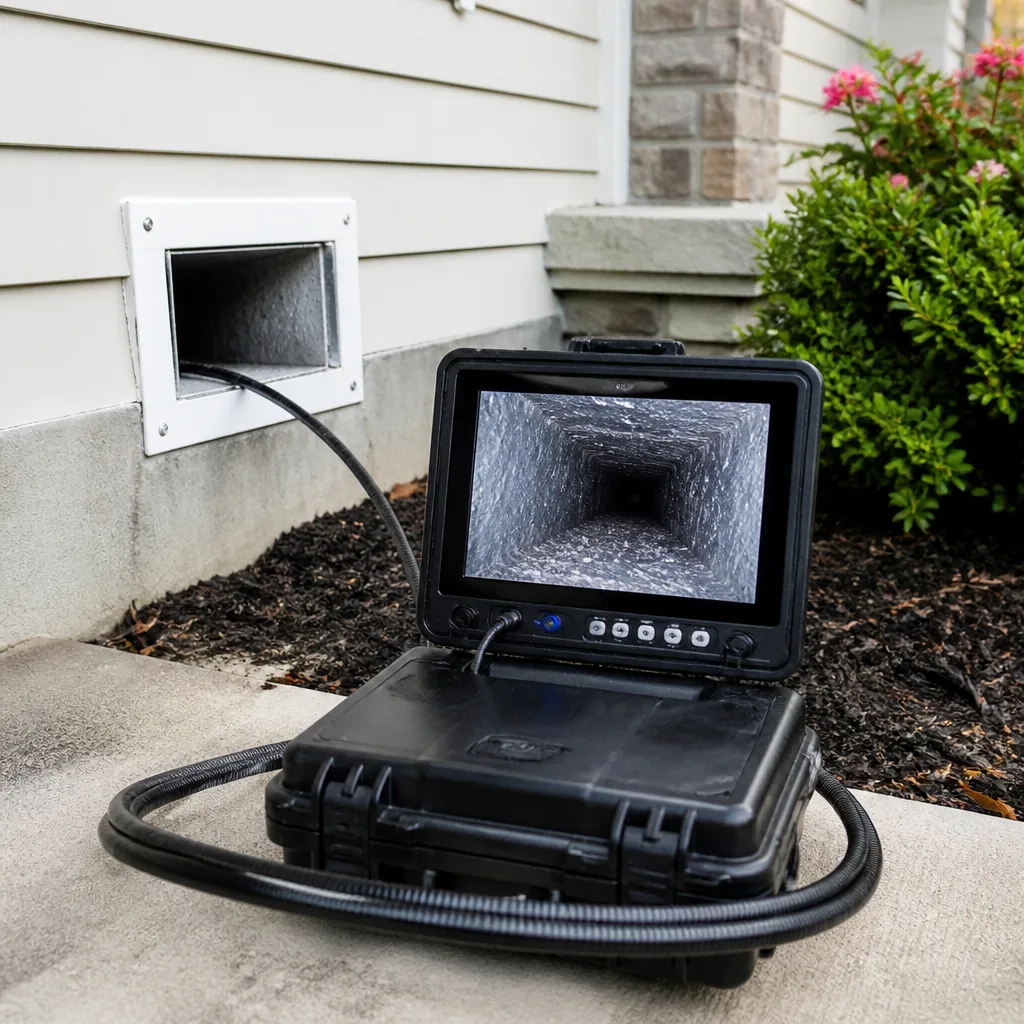 Camera inspection
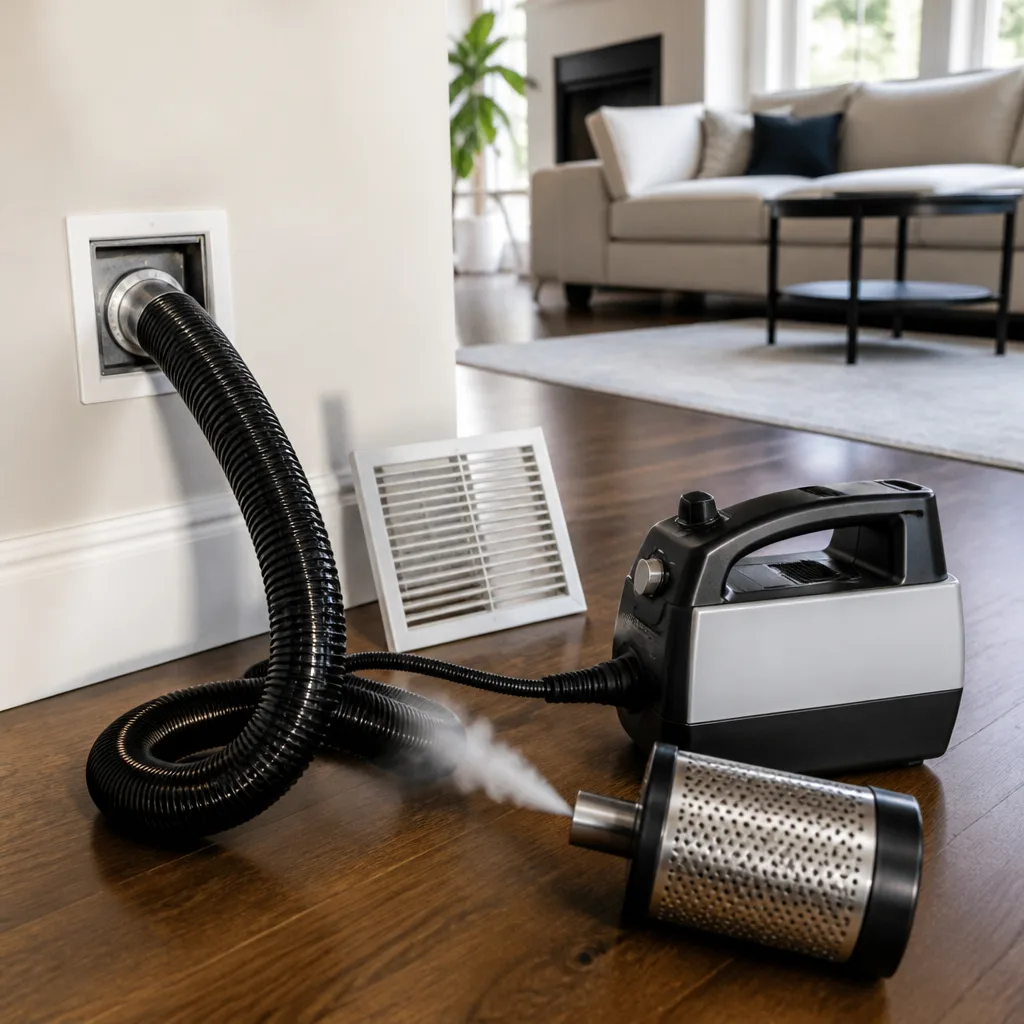 Sanitizing & deodorizing
Whole-system duct and dryer vent check with before-and-after photos - you see exactly what came out of your vents
That "$99 whole-house special" is a bait ad - the real number appears once they are in your hallway, or the "clean" is a shop-vac at the register. We photograph the inside of your ducts before and after instead.
DIY vs Professional Air Duct Cleaning: The Stockton Homeowner’s Decision Guide
Every DIY duct cleaning video shows the same thing: a shop vac nozzle pushed into a floor register, a puff of dust, a satisfying before-and-after shot. It’s the duct-cleaning equivalent of cleaning a hallway by vacuuming only the doorway. The register is the visible part. The work happens in the trunk lines, the branch runs, and the plenum behind the air handler, and none of that is reachable with a consumer tool. This guide explains what homeowners in Stockton can genuinely handle on their own, where DIY stops being effective, and how to tell the difference between a real professional job and a coupon that leads to an upsell.
Quick Answer
Homeowners in Stockton can safely and effectively clean registers, return grilles, and the first foot or so of visible branch duct with a shop vac and a microfiber cloth. Anything beyond that access point requires simultaneous mechanical agitation and high-CFM negative-air pressure, and no consumer product delivers both. A proper professional clean every four to six years handles what DIY cannot reach, and it’s non-optional after a renovation, a mold sighting, or pest evidence.
Styles & brands we work with
- Whole-home duct cleaning
- Dryer vent cleaning
- Camera inspection
- Sanitizing & deodorizing
Table of Contents
- What Physics Actually Governs Debris Removal in Ductwork
- What Stockton Homeowners Can Do Effectively
- What Goes Wrong When DIY Goes Past the Register
- What Professional Equipment Actually Does Differently
- When Professional Duct Cleaning Is Non-Optional
- The Cost Math: Professional Cleaning vs. Neglect
- How to Vet a Duct Cleaning Company in Stockton
What Physics Actually Governs Debris Removal in Ductwork
Duct cleaning is not a vacuuming problem. It’s a particle-liberation problem. Debris inside a duct settles onto the walls, sticks to the seams, and bonds to the metal over time, especially in a dry inland climate like Stockton’s where dust is fine and static-charged. To remove that debris, you have to do two things at once: break it loose from the surface, and capture it before it re-settles somewhere downstream.
That means simultaneous agitation and negative pressure. Rotary brush systems like the Rotobrush line spin a bristle head against the duct wall to knock debris free while a vacuum pulls it out of the airstream. The vacuum needs enough CFM (cubic feet per minute) to maintain negative pressure inside the duct network even as the brush dislodges material. The moment agitation outpaces capture, debris stops moving out and starts moving deeper in.
A shop vac, even a large one, is not built for this. Its airflow is tuned for short bursts at a hose end, not sustained negative pressure across 40 feet of trunk and branch. Its filter is usually a wet/dry paper cartridge, not HEPA, which means the fine particles it lifts get blown back into the room. And there’s no brush: the only thing loosening debris is the airflow itself, which is why shop vacs get the loose dust off a duct ceiling but leave the bonded film behind.
The professional version of this is called source capture. Nikro HEPA-filtered equipment and Abatement Technologies negative-air units hold the whole duct system under containment while the work happens, so dislodged particles go into a HEPA filter instead of into your kitchen. That’s the same standard used in remediation work, applied to a routine residential cleaning.
What Stockton Homeowners Can Do Effectively
This is where the DIY question actually has a clean answer. There is a real list of tasks a homeowner can do well, and doing them regularly extends the interval between professional cleans. The trick is knowing where the boundary is.
- Remove and wash the floor and wall registers. Most registers pop out with two screws. Soak them in warm soapy water, scrub the fins with a soft brush, dry them fully, and reinstall. This alone removes a surprising amount of the visible dust load.
- Wipe down the return grille and the first 12 to 18 inches of visible branch duct. A microfiber cloth and a HEPA shop vac nozzle do this well. The return grille is the biggest collection point in most Stockton homes because it pulls air from the living space, and it’s the one surface where you can see your own results.
- Inspect with a phone camera on a selfie stick. Slide the phone into an open register or a return grille and take video. You can see whether the duct liner is intact, whether there’s visible debris field build-up, and whether you spot anything that looks like mold, rodent droppings, or pest nesting. This is an inspection, not a cleaning, and it’s genuinely useful information to have before you call anyone.
- Change the filter on schedule and use the right one. A filter that’s too restrictive chokes airflow; a filter that’s too thin lets fine dust pass. Follow the filter recommendation from your system’s manufacturer or your HVAC technician. Homes with pets, recent landscaping dust, or a wood stove nearby often need changes more often than the box says.
- Keep the condensate drain and the air handler cabinet clean. Not ductwork, strictly speaking, but the wet side of the system is where microbial growth starts, and keeping it dry and clean protects everything downstream.
That’s the honest DIY list. Register and return grille cleaning, visual inspection, and filter discipline. If you do those well, you’re protecting the system between professional services.
What Goes Wrong When DIY Goes Past the Register
The failure mode of DIY duct cleaning isn’t that nothing happens. It’s that the wrong thing happens. Here are the specific ways homeowners cause more work for themselves by going past the register.
- Debris gets pushed deeper into trunk lines. A shop vac or garden blower blowing into a register can dislodge settled debris and send it toward the air handler, the coil, or a branch run that now becomes the new problem spot. In Stockton’s dry climate, dust loads tend to be fine and light, which is exactly the type that blows around easily but doesn’t vacuum out easily.
- Flex duct liners get torn. A lot of Stockton homes – especially newer construction and additions – have flexible duct in the attic or crawlspace. The interior liner is a thin plastic skin over a wire helix. A brush or an aggressive nozzle tears it, and once it’s torn you’ve created a permanent debris trap that also restricts airflow. Repairing it means replacing the run, not cleaning it.
- Disturbed debris re-circulates into the home. Without HEPA containment, the particles lifted from the ducts go into the air you’re breathing in the room. In a house with allergies, that’s the opposite of the intended outcome.
- Settled debris gets stirred, not removed. Homeowners often report that after a DIY attempt the smell got worse. That’s usually because a layer of settled organic dust got broken up into the airstream without being captured.
- The registers look clean and the ducts aren’t. The visible surface is not the measured one. A register can be spotless while the trunk line behind it holds years of build-up.
None of this is a knock against homeowners trying to maintain their own systems. It’s a description of why the boundary between what works and what doesn’t is sharper than most guides admit. In our experience, the homes that start with a shop vac and end with a professional call almost always spend more on filter changes in between.
What Professional Equipment Actually Does Differently
Professional duct cleaning is defined by three things happening in the same job: agitation, capture, and containment. Take any one of those out and the work isn’t complete.
Agitation comes from purpose-built equipment. Rotobrush rotary brush systems drive a bristle head through the branch runs with a flexible whip, mechanically scrubbing the duct walls as it goes. The brush size and stiffness change with the duct material, which is how the technician protects flex liner while still stripping the metal duct clean. A shop vac and a leaf blower have no agitation stage at all.
Capture comes from high-CFM negative pressure at the source. Nikro HEPA-filtered vacuums hold the debris at the brush head as it’s freed, so nothing migrates to a different part of the system. The vacuum runs continuously through the job, not in bursts.
Containment comes from the equipment that most residential cleaners don’t bring: negative-air machines. Abatement Technologies negative-air and HEPA systems are the tool of choice in remediation work, and applying them to everyday cleaning means visible dust and airborne particulate stay inside the work zone. This matters most in occupied homes with kids, pets, or someone with asthma.
Surface protection is the fourth piece. Guardsman products are laid down over floors and furniture before the work starts, which is what you’re paying for when a company is careful with your home and not just competent with the ductwork. A crew that doesn’t protect your floors is telling you something about how they think about the work.
Our technicians have up to experience with these systems. Purpose-built equipment, not improvised tools, is the floor of the job, not the ceiling.
When Professional Duct Cleaning Is Non-Optional
There’s a difference between “a professional clean every few years is good practice” and “you can’t safely skip this.” The situations below fall in the second category.
- Post-renovation debris. Drywall dust, sawdust, insulation fibers, and construction adhesive particles get pulled into the return air during a remodel and settle throughout the system. Drywall dust is abrasive on fan blades and coils, and it doesn’t come out with a shop vac. Cleaning is required before the system is run normally again.
- Visible mold anywhere in the system. If you spot mold on a register, a return grille, or inside a duct on phone-camera video, cleaning alone isn’t enough. Any company that says it is needs to be shown the door. Mold points to moisture, moisture points to a source, and the source has to be found. See air duct cleaning for how that process is handled.
- Vermin evidence. Rodent droppings, nesting material, or gnaw marks in ductwork mean a HEPA-contained cleaning with proper protective equipment and, in most cases, sanitation after. This is not a homeowner job and it’s not safe to run the system in the meantime.
- New home purchase with unknown history. You don’t know what the previous owner did to those ducts, when they last cleaned them, or whether a renovation pushed debris into the system. A baseline inspection and clean establishes where you’re starting from.
- After a fire, flood, or major water event. Smoke residue and moisture intrusion both leave material in ductwork that requires source capture and containment, not just a shop vac pass.
- Persistent musty odor or reduced airflow that filter changes don’t fix. Both are symptoms with multiple causes, and ductwork is one of them. A visual inspection answers the question cheaply before any cleaning happens.
For homes with gas appliances in Stockton, always confirm the technician knows not to disturb any combustion venting during duct work. That’s not a duct-cleaning job, and any company that doesn’t respect the boundary between ductwork and combustion venting is not one to hire.
The Cost Math: Professional Cleaning vs. Neglect
A proper professional clean every four to six years is a small annual number. Ongoing neglect is a bigger annual number that shows up in pieces: filter changes that come too often, coil cleanings, blower motor strain, and lost efficiency you don’t notice because it happens slowly.
Here’s how to frame it. Instead of tracking what a single duct cleaning costs, track what your system costs per year to run in each scenario:
- Well-maintained system: one professional clean every four to six years, filters changed per manufacturer interval, coil cleaned when the technician calls for it, condensate drain kept clear. Predictable line items.
- Neglected system: filters that clog faster because they’re catching debris that should have been removed farther upstream, more frequent coil cleanings because the coil is acting as a filter, motor strain from restricted airflow, and shortened equipment life. Less predictable, always more.
The specific dollar amounts depend on your home’s size, the number of systems, and the number of branch runs, which is why we don’t quote a number here. What we can say plainly: a written estimate on a whole-system clean is the honest number. If a company quotes a per-vent price over the phone without seeing the system, that’s not a dry-duct estimate, it’s a coupon that becomes a bigger invoice.
The other half of the math is the dryer. Dryer vent cleaning is a separate job from duct cleaning and it’s the one fire risk in the house that a homeowner can and should manage. Lint buildup in a dryer vent is a leading home fire cause, and Stockton’s dry air doesn’t change that. See dryer vent cleaning for where the risk sits and how often it needs attention. It belongs on the same maintenance calendar as the ducts, and it’s the piece most homeowners skip.
How to Vet a Duct Cleaning Company in Stockton
Most of the frustration homeowners report about duct cleaning comes from a company that quoted low and showed up without the equipment to do the job. Here’s what to ask before you book.
- Ask what equipment they bring. Look for a named rotary brush system and a HEPA vacuum. If the answer is “a really strong vacuum,” ask what kind. Purpose-built equipment is the baseline, not a premium.
- Ask whether they use negative air or containment. Any company working in an occupied home should be able to explain how they keep dust out of your living space. Abatement Technologies negative-air units or equivalent HEPA containment is the answer you want.
- Ask for a whole-system estimate, not a per-vent price. The estimate should be in writing, should cover the whole system as it actually exists in your home, and should be the final price unless the technician finds something in the inspection that wasn’t visible beforehand. Any mid-job change should come with a revised written estimate before work continues.
- Ask for before and after photos of your own ducts. A company that does the work can show you the trunk line before and after with its own camera. That’s the only proof that answers “was it actually done.”
- Ask what happens if the technician finds torn flex liner or a disconnected duct. The answer should mention repair, not just cleaning around it. Duct repair is a separate scope and should show up in the estimate before the cleaning starts, not afterward. Stockton homes with attic or crawlspace runs are the ones most likely to have damage that a phone camera never caught.
- Ask whether the company handles dryer vents and duct repair too. These are three linked systems in the same house, and a company that only does one of them will still leave the other two problems in place.
You can read more about how we scope a job on our Duct Cleaning Stockton page, and if you want to see how we think about the local market, the Stockton overview covers the neighborhoods, housing stock, and climate factors that shape the work here.
Common Mistakes to Avoid
- Blowing into a register. It doesn’t clean the duct. It dislodges settled debris and pushes it deeper into the system, which then needs a real cleaning plus a coil inspection. Never blow compressed air or a leaf blower into a duct in a Stockton home.
- Using a shop vac without HEPA filtration. The fine dust that comes out of a residential duct in a dry inland climate is the exact size that stays airborne. A wet/dry vac with a paper filter blows it right back into the room. If you’re going to vacuum registers at all, use a HEPA vacuum.
- Running a brush into flex duct without knowing the liner condition. A torn interior liner turns a branch run into a permanent filter. Homeowners don’t have the equipment to inspect and repair flex, so leave flex cleaning to a company that does.
- Judging the job by the visible register. A clean register says nothing about the trunk line. Photos of the actual ducts are the only way to know the work happened.
- Booking on price alone without asking what equipment arrives. The difference between a $99 coupon and a proper whole-system clean is not haggling room. It’s the difference between a shop vac and a rotary brush plus HEPA containment.
- Skipping the dryer vent because the ducts got cleaned. They’re different systems. A cleaned air duct system and a lint-packed dryer vent can coexist in the same house.
- Not asking about the combustion venting in a gas-appliance home. Any technician working in the attic or mechanical closet should know to leave it alone. If they don’t, don’t let them start.
See the difference
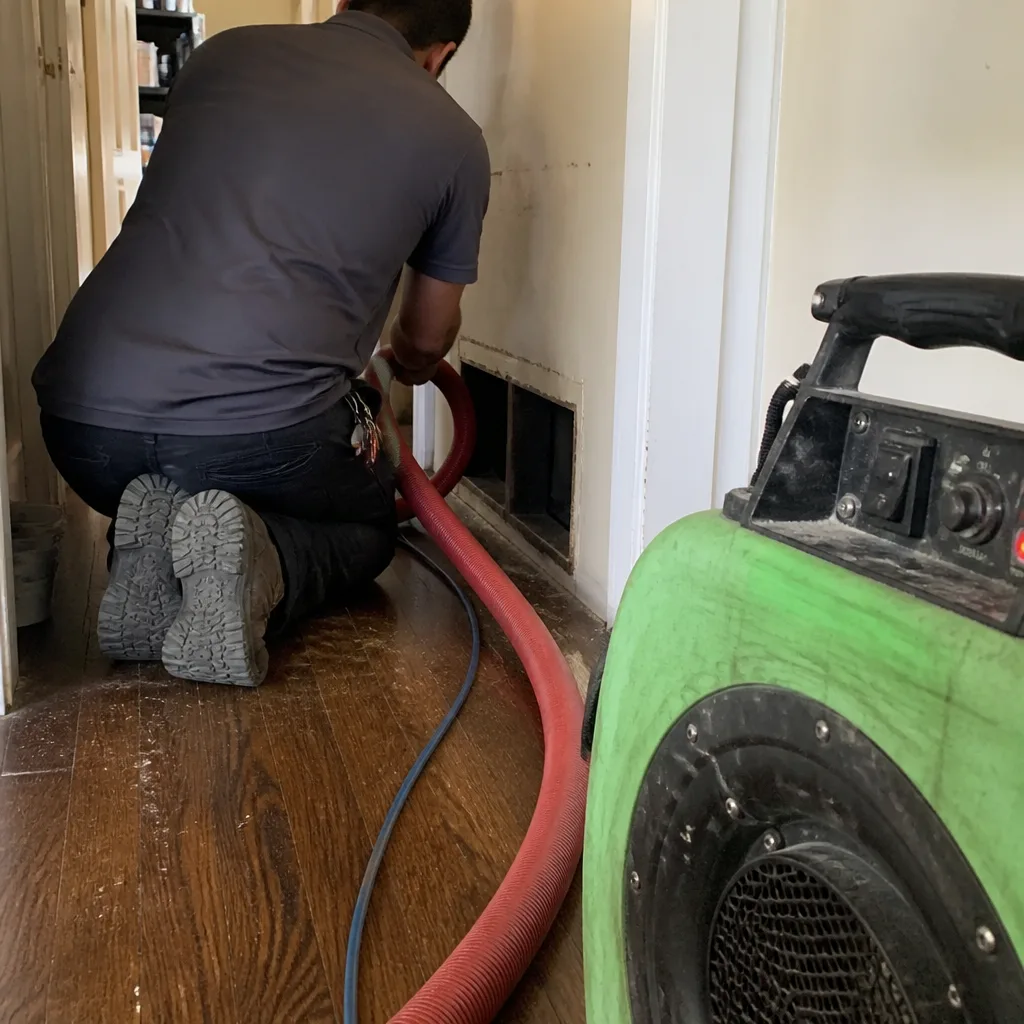 Before
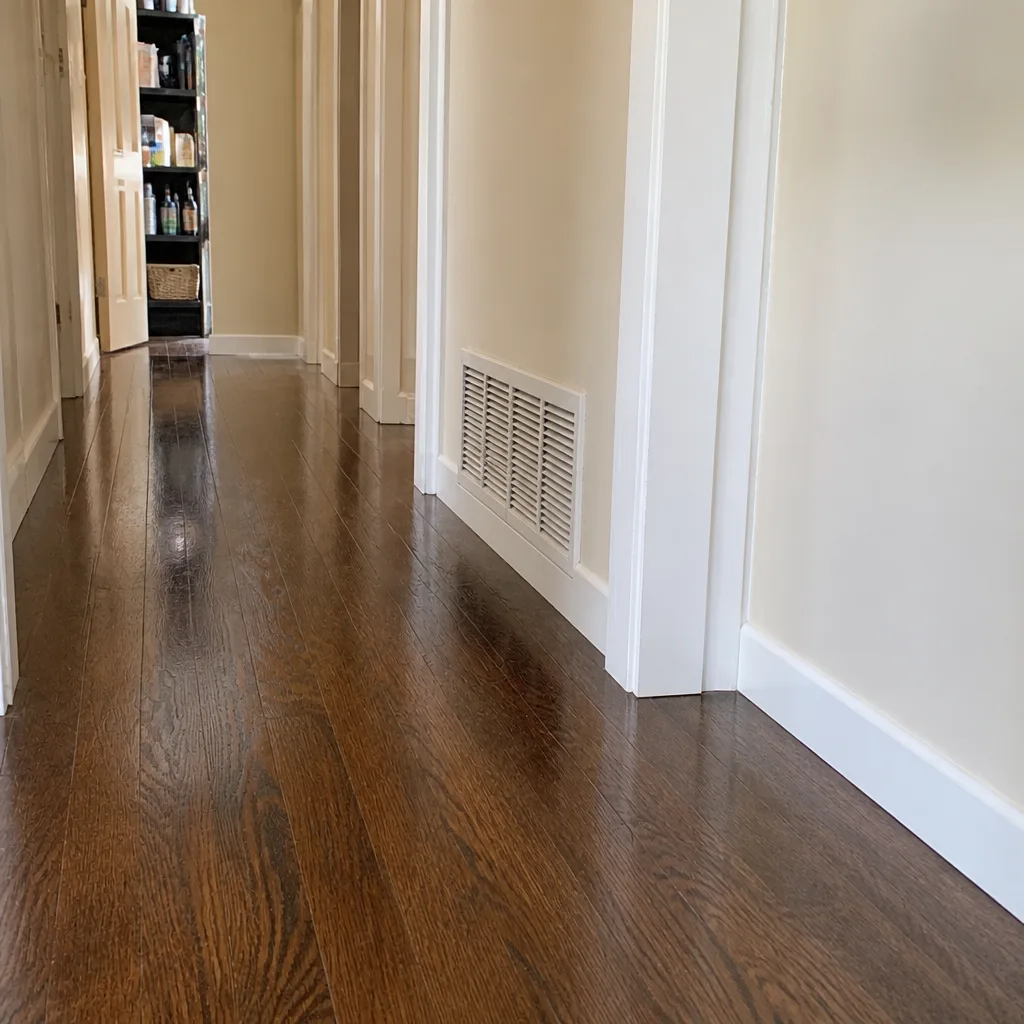 After
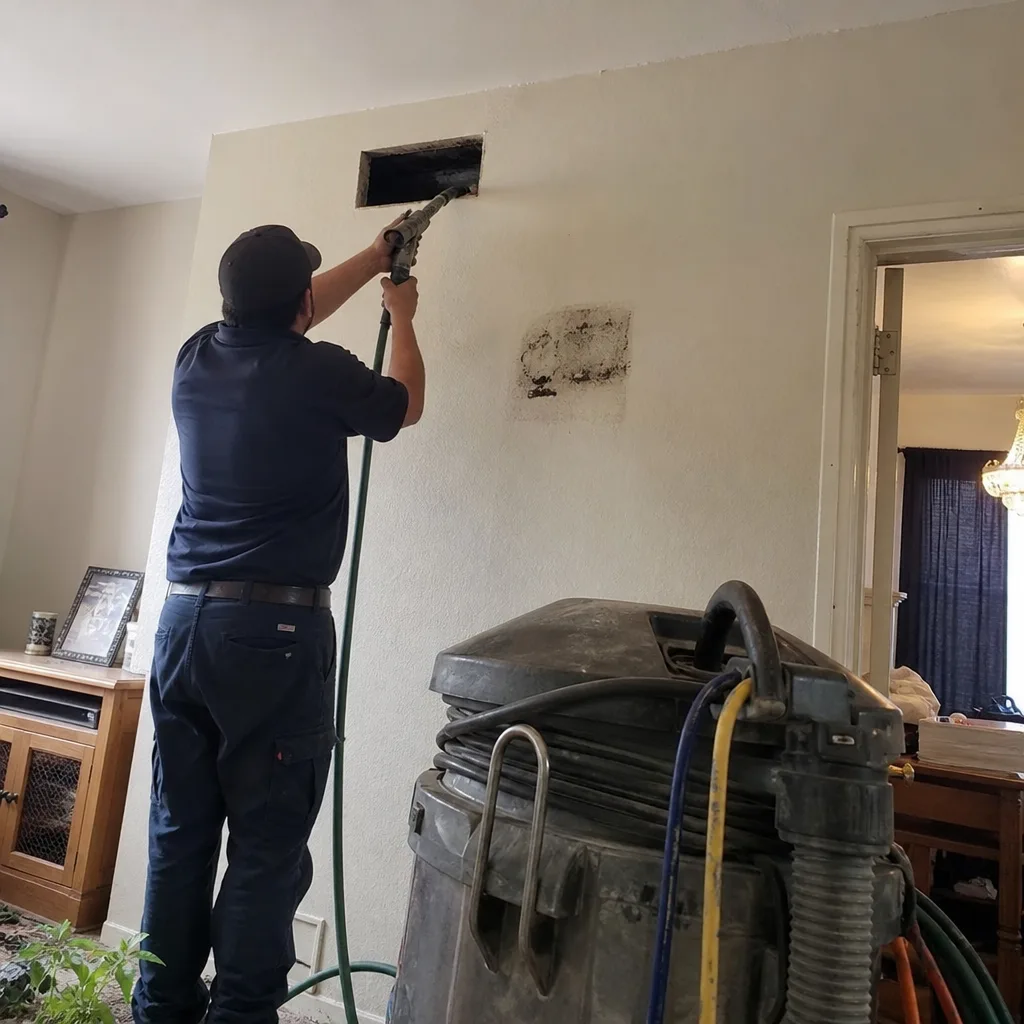 Before
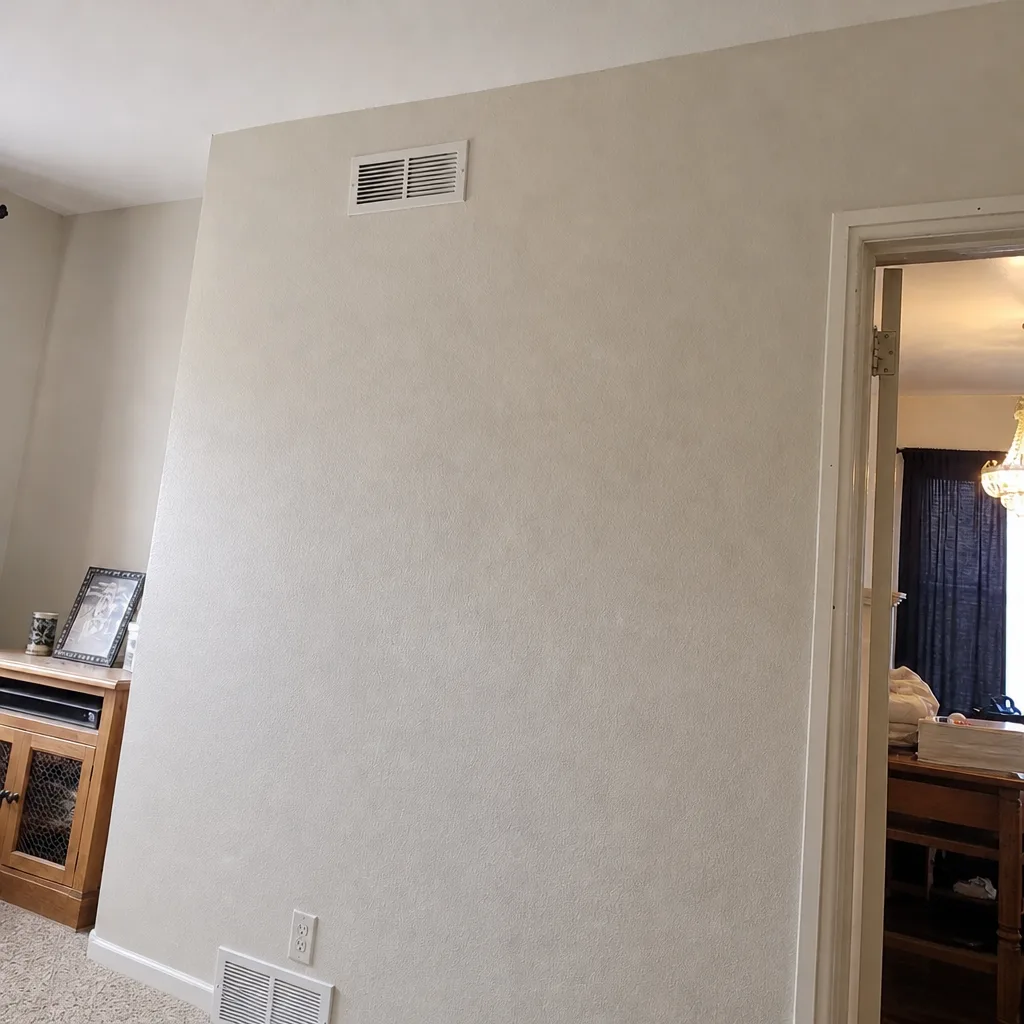 After
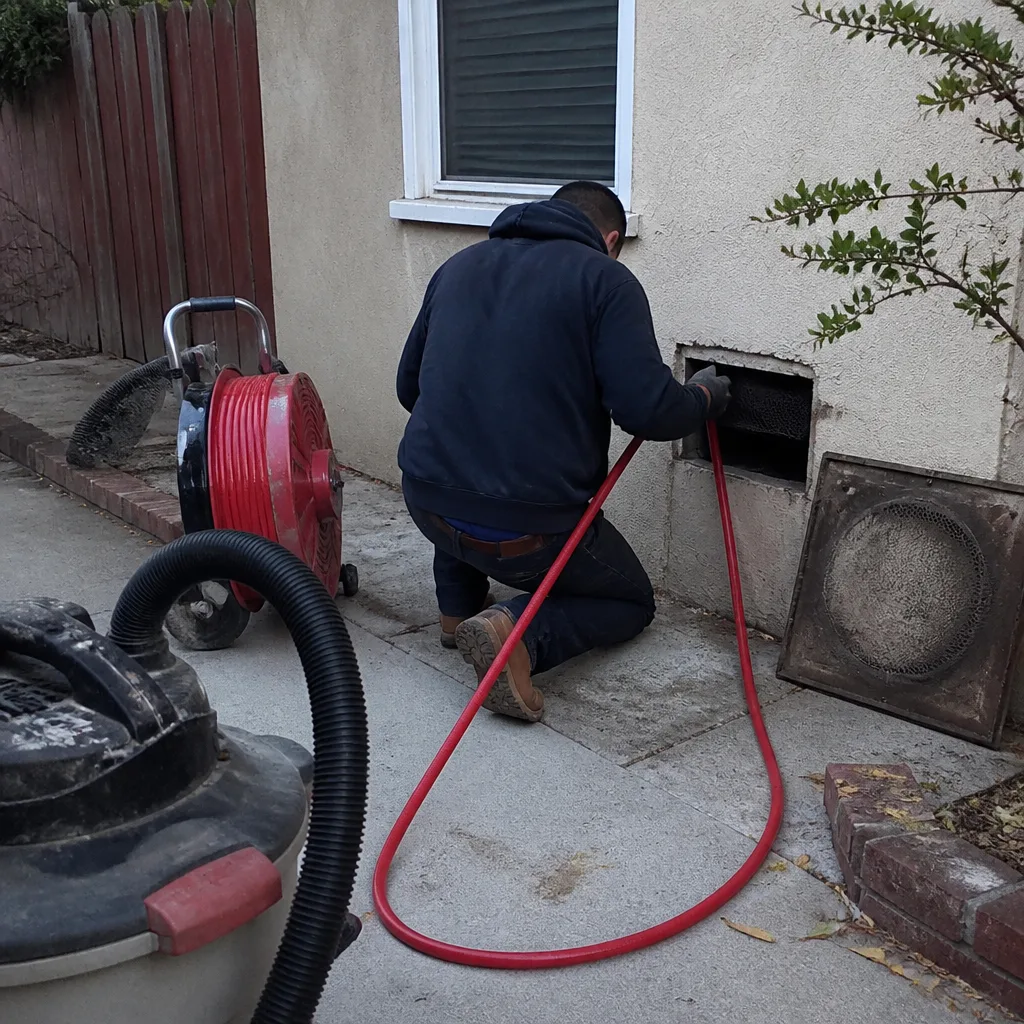 Before
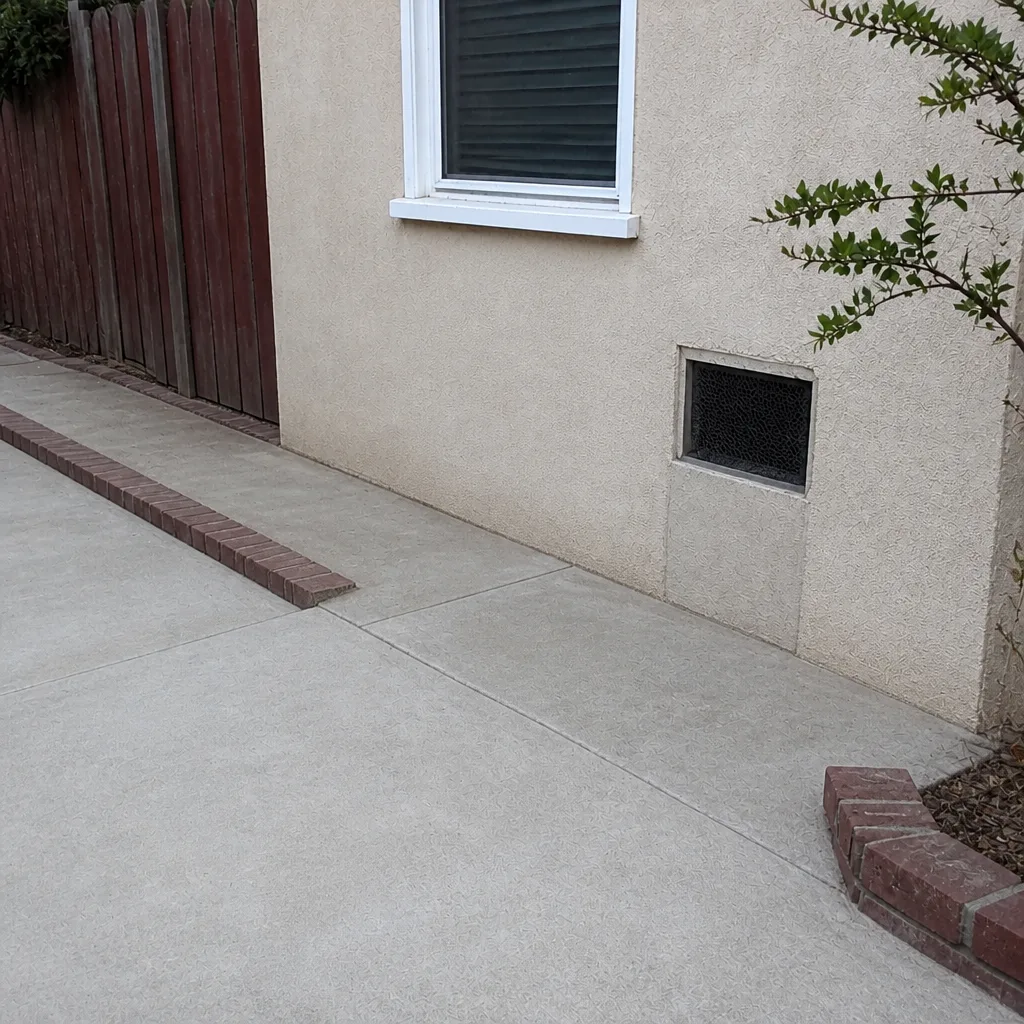 After
When to Call a Professional
Call a professional if you’re past the register and grille stage: you’ve seen what’s inside a duct on a phone camera and didn’t like it, you’ve just finished a renovation, you found pest evidence, there’s visible mold anywhere in the system, or you bought a Stockton home with no service history. Also call if your filter changes suddenly aren’t keeping up, if airflow has dropped, or if you notice a musty smell that gets worse when the system runs. These are diagnostic situations, not DIY jobs. Duct Cleaning Stockton offers free estimates in Stockton. Call (855) 263-2873. We answer 24/7. Fast dispatch from 7am to 7pm, Sunday through Friday.
Frequently Asked Questions
You can clean registers, return grilles, and the first foot or so of visible branch duct with a HEPA vacuum and a microfiber cloth. You cannot clean trunk lines, the plenum, or the deeper branch runs without simultaneous rotary agitation and high-CFM negative pressure, and no consumer tool delivers both. Call (855) 263-2873 for an exact quote – estimates are free.
Whole-system cleaning is priced per job, not per vent, and the written estimate sets the final price after the system is inspected. The typical range depends on the number of systems, the size of the home, and whether the ducts are accessible from the attic and crawlspace. Call (855) 263-2873 for an exact quote – estimates are free.
Because they’re quoting a different job than the one you need. A low coupon usually covers a surface pass with a shop vac, no rotary agitation, and no HEPA containment, and it becomes a larger invoice once the technician is on site. Ask what equipment arrives before you book, and treat a written whole-system estimate as the honest number. Call (855) 263-2873 for an exact quote – estimates are free.
Ask for before and after photos of your own ducts, taken from inside the system, not just of the registers. A company using a camera to inspect also has the photos to prove the work. If a crew finishes and can’t show you pictures of the trunk line, they didn’t do the work you paid for. Call (855) 263-2873 for an exact quote – estimates are free.
Every four to six years is a reasonable interval for a typical home, sooner after a renovation, a pest problem, a mold sighting, or a new home purchase with unknown history. Homes with pets, dusty outdoor conditions nearby, or heavy filter loading should go on the shorter end. Between professional cleans, register and grille cleaning plus filter discipline do real work. Call (855) 263-2873 for an exact quote – estimates are free.
Yes, mostly in flex duct. A brush or aggressive nozzle tears the interior liner, which then becomes a debris trap and restricts airflow until the run is replaced. A shop vac without HEPA also puts the fine dust back into your living space. That’s why we draw the DIY line at the register and grille. Call (855) 263-2873 for an exact quote – estimates are free.
The Bottom Line
The DIY versus professional question has a sharper answer than most guides admit. Register cleaning, return grille cleaning, visual inspection with a phone camera, and filter discipline are real homeowner jobs, and doing them well extends the useful interval between professional cleans. Past the register, the physics stops cooperating: debris needs to be agitated and captured at the same time, and no consumer product does that. The non-optional scenarios – post-renovation, mold, pests, new home purchases – are not judgment calls. If you’re past the register and want a real answer about what’s inside your system, a written estimate is the right next step.
For Stockton homeowners who want the ducts, the dryer vent, and any duct repair handled as one job by a team with the right equipment, we’re here for it. Call (855) 263-2873. We answer 24/7. Fast dispatch from 7am to 7pm, Sunday through Friday. The estimate is free, and the price is set per job by the written estimate before any work starts.
Written by the team at Duct Cleaning Stockton.