
Last updated November 16, 2026
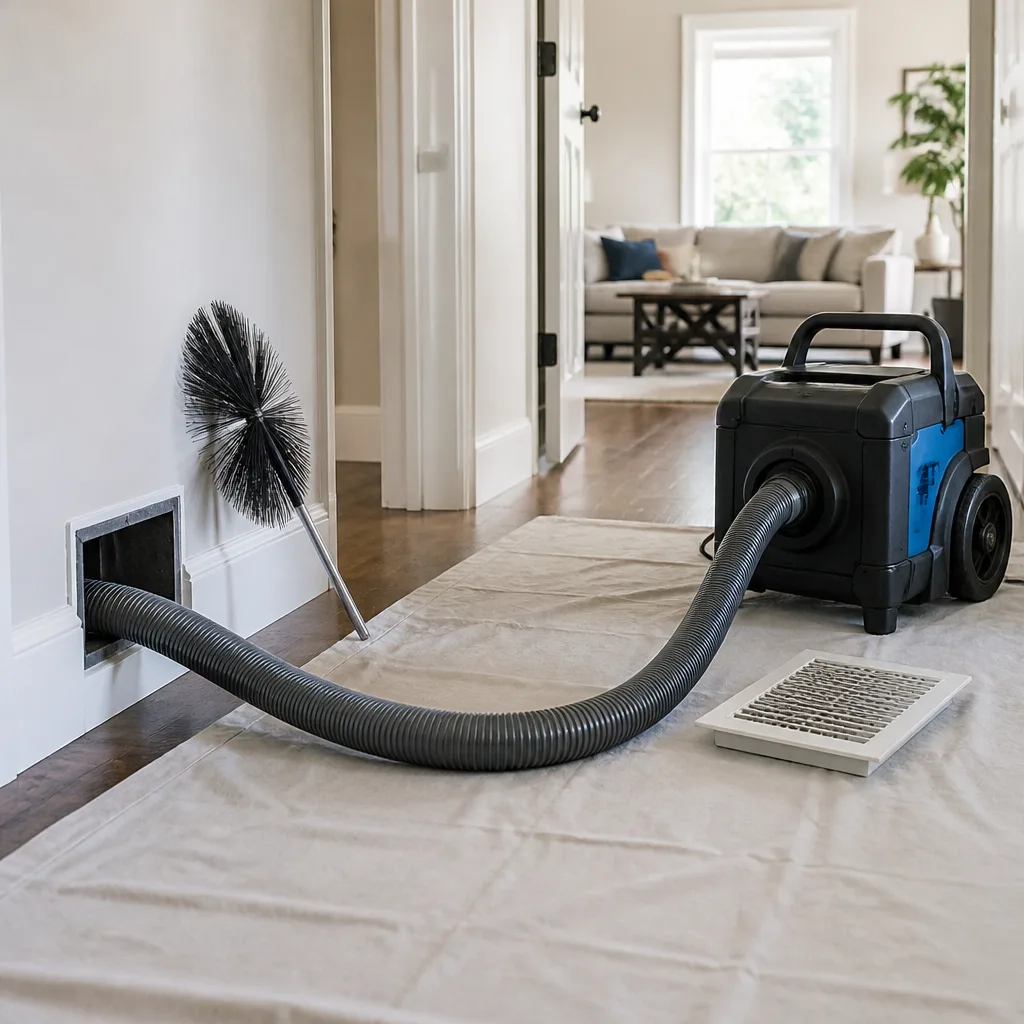 Whole-home duct cleaning
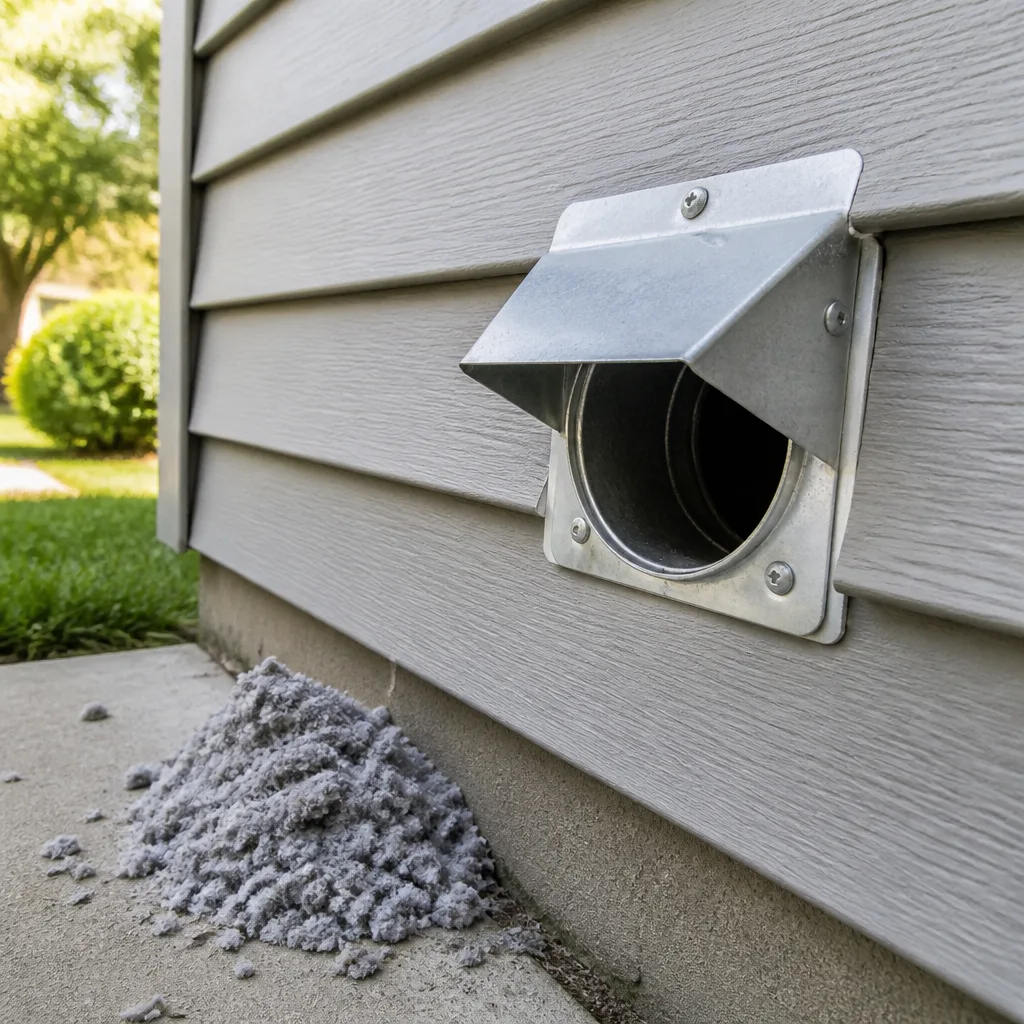 Dryer vent cleaning
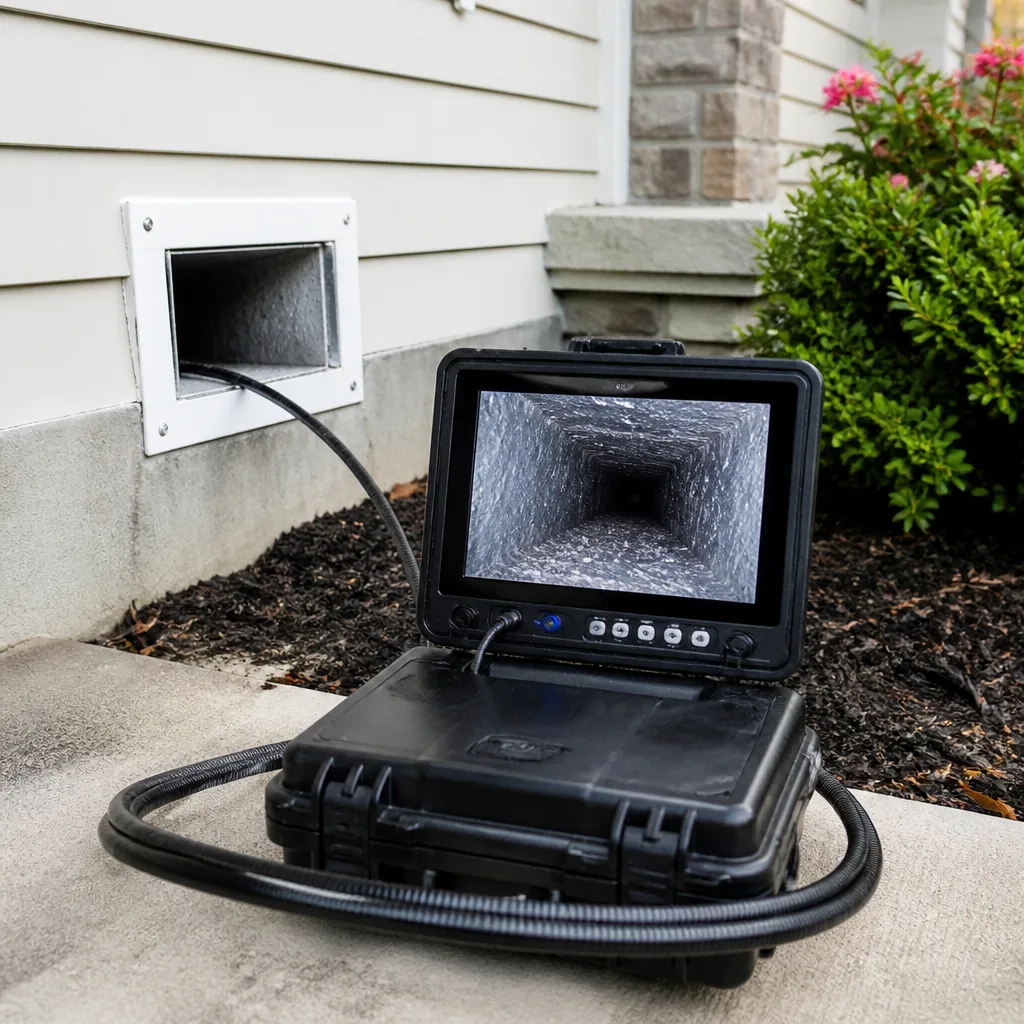 Camera inspection
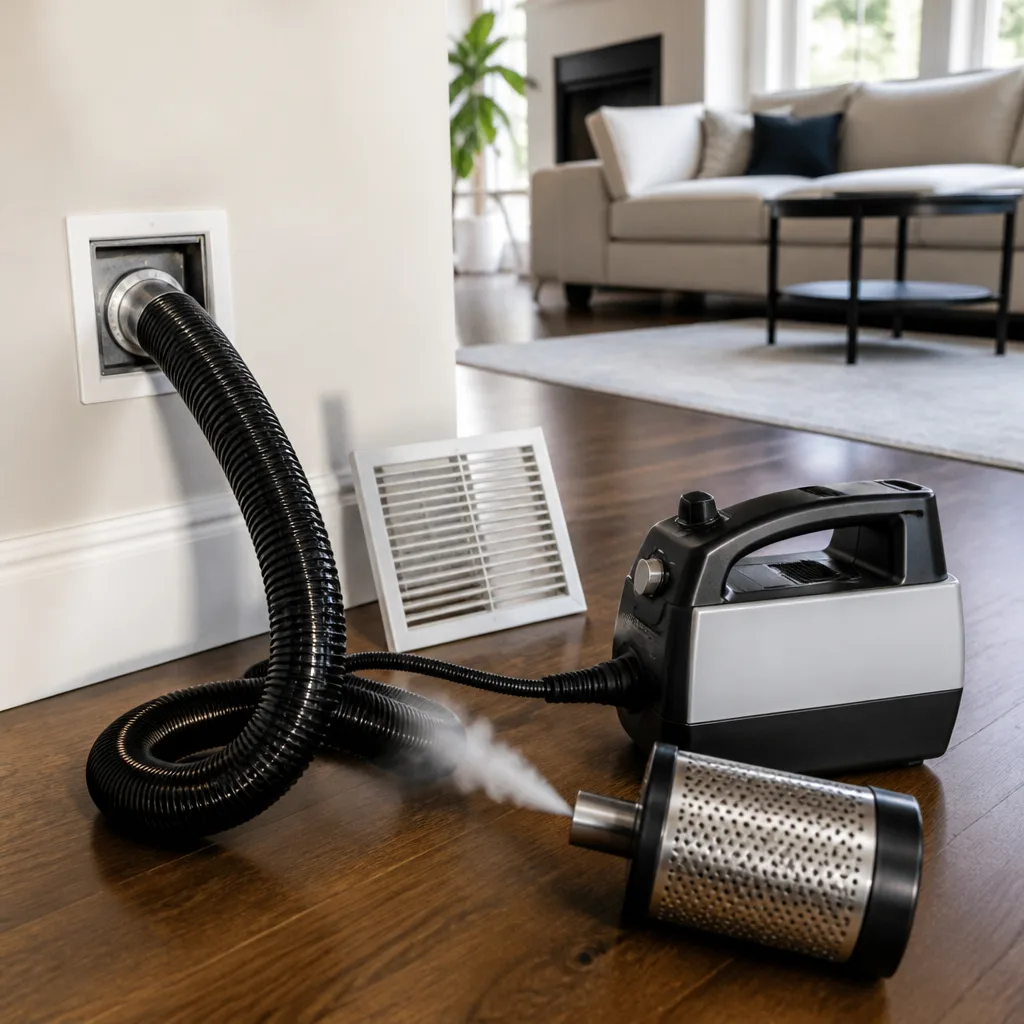 Sanitizing & deodorizing
Whole-system duct and dryer vent check with before-and-after photos - you see exactly what came out of your vents
That "$99 whole-house special" is a bait ad - the real number appears once they are in your hallway, or the "clean" is a shop-vac at the register. We photograph the inside of your ducts before and after instead.
The Complete Guide to Air Duct Cleaning in Stockton
Most air duct cleaning advice you’ll read online was written for a house in a mild coastal climate with sealed windows and a heat pump. Stockton isn’t that house. Here in the San Joaquin Valley, the air that moves through your ductwork carries something different: harvest dust, agricultural pollen, pesticide residue, and the slow humidity swings of tule fog season. That combination leaves a residue inside ducts that a generic “blow out the vents” service won’t touch. This guide explains what actually accumulates in Stockton ductwork, why the construction era of your home matters, and what equipment is genuinely required to remove contamination rather than just stir it up. By the end you’ll know how to tell a real cleaning from a cosmetic one, how airflow measurement proves the work was done, and what to ask before you book anyone.
Quick Answer
Air duct cleaning in Stockton means removing accumulated dust, agricultural particulate, and moisture-driven microbial growth from the entire duct system using source-removal equipment, not just vacuuming at the registers. A proper job uses rotary brush agitation and HEPA-filtered negative-air containment so dislodged debris is captured rather than redistributed into your living space. Whole-system cleaning typically takes a few hours and is priced per system based on the size and layout of your ductwork, with the final figure set by a written estimate before any work starts.
Styles & brands we work with
- Whole-home duct cleaning
- Dryer vent cleaning
- Camera inspection
- Sanitizing & deodorizing
Table of Contents
- Why Stockton Ductwork Collects What It Does
- Tule Fog, Moisture Cycles, and Flex Duct
- Agricultural Particulate vs. Ordinary House Dust
- Source Removal vs. Blow-and-Go Cleaning
- Why CFM Readings Beat a Visual Inspection
- Light-Commercial Ducts in Stockton’s Industrial Corridors
- What a Proper Cleaning Job Looks Like, Step by Step
- What Air Duct Cleaning Costs in Stockton
Why Stockton Ductwork Collects What It Does
The San Joaquin Valley tops the American Lung Association’s “Most Polluted Cities” list year after year. That’s not a marketing line, it’s a description of the air your HVAC system pulls in and pushes through every room. Most national duct cleaning guides are written as if every home sits in coastal San Diego with clean marine air and moderate temperatures. Stockton homeowners are working with a different set of inputs entirely.
Three local factors drive contamination faster here than in most of the country:
- Agricultural particulate. Stockton sits in the middle of one of the most productive farming regions on earth. Harvest dust, pollen from orchard and field crops, and airborne soil particles all enter through return air and settle on duct walls.
- Tule fog humidity cycles. The winter fog that blankets the Valley brings weeks of high relative humidity, then dries out. That repeated wet-dry cycling inside ductwork is exactly the condition that promotes microbial growth on porous surfaces.
- Housing stock from the 1970s through the 1990s. A large share of Stockton homes were built in this window, and many were fitted with flexible duct systems that trap particulate differently than rigid metal ductwork does.
The result is a duct system that accumulates material faster and in a different composition than a coastal California home. Cleaning methods need to match that reality. When we look inside ductwork in Stockton, we’re looking for the fingerprints of the Valley, not the generic dust-and-dander profile that guides assume.
Tule Fog, Moisture Cycles, and Flex Duct
If your Stockton home was built between roughly 1970 and 1995, there’s a good chance the distribution system is flexible duct: a corrugated plastic inner core wrapped in insulation and an outer jacket. Flex duct is fast to install and efficient when it’s clean, but its ribbed interior gives particulate somewhere to grab. In a dry climate that’s a nuisance. In a climate with a tule fog season, it’s a growth surface.
Here’s what’s happening. During fog season, relative humidity stays high for extended stretches. Cool duct surfaces in unconditioned spaces can sit at or below the dew point, and condensation forms on the inner liner. That moisture doesn’t fully dry out during a foggy week. It creates a damp microclimate in the duct wall, and any organic particulate already stuck there, such as skin cells, pet dander, fabric fibers, and agricultural dust, becomes a food source.
What does that look like when we inspect it?
- Dark mottled staining on the inner liner rather than an even dust film
- A musty or earthy smell noticeable when the system first starts after being off
- Visible buildup concentrated near the plenum and at the last few feet before each register
- Compressed matting on the bottom of horizontal runs where moisture pooled
Cleaning a flex system with microbial growth takes more than a vacuum pass. The duct wall has to be agitated mechanically so the growth and the base layer of particulate are lifted, then captured at the source with HEPA filtration. We use Rotobrush rotary systems for exactly this reason: the rotating brush contacts the full duct wall while extraction runs simultaneously, so what’s loosened is removed rather than left to resettle. Where a system shows widespread contamination beyond cleaning, duct repair or section replacement may be the honest answer, and we’ll tell you that instead of charging you for a cleaning that won’t solve it.
Agricultural Particulate vs. Ordinary House Dust
Dust is not one substance. Household dust in a typical home is mostly textile fibers, skin cells, pet dander, and everyday soil tracked in from outside. In Stockton, add a layer that has no equivalent in a dense city or a coastal town: agricultural particulate carried on the seasonal wind.
When we pull the register and look at what’s caked on the duct walls in a Stockton home near the farmland edges, like the areas north toward the Delta or the eastern side approaching the foothills, the composition is noticeably different from what you’d find in a central Stockton home with a well-sealed envelope. It tends to be:
- Finer and more mineral-heavy (field soil and dust carried on harvest air)
- Mixed with pollen from orchard and row crop seasons, which can bind to damp surfaces
- More likely to carry residue from agricultural applications, which is why source containment matters. Loose particulate should be extracted, not blown into the room air.
Why does this change the cleaning method? Because fine mineral particulate is heavier than typical house dust and penetrates deeper into the duct wall texture. A soft vacuum wand pulls the top layer and leaves the rest. A rotary brush lifts the embedded layer so it can be captured. And because the material is fine, ambient capture is critical: without containment, agitating it just puts fine dust into the air your family breathes. That’s why we use Abatement Technologies negative-air and HEPA equipment, the same standard used in remediation work, to hold the cleaning zone under negative pressure and pull dislodged particulate into a filtration unit rather than into the hallway.
One practical note for Stockton homes near farmland: check your filtration setup. If you have a Honeywell or Aprilaire media filter or air cleaner, it’s doing more work here than it would in a less dusty region, and a filter that’s being pulled out well ahead of schedule is telling you something about the duct system upstream. We work with both brands regularly, so we can tell you whether your filtration is matched to the load your ductwork is actually seeing.
Source Removal vs. Blow-and-Go Cleaning
Not all duct cleaning is the same work, and the difference isn’t a matter of degree. It’s a difference in method, equipment, and what’s left behind when the technician drives away.
Source-removal cleaning is the professional standard: contact the entire duct wall mechanically, agitate what’s stuck there, and capture it with HEPA filtration while you work. Blow-and-go cleaning is the opposite approach: push compressed air through the system from one end, dislodge a portion of the debris, and vacuum a little at the register before wrapping up. The dust that was on the duct wall ends up in the room air, and much of it resettles in the same ducts within days.
Here’s how to tell which service you’re actually getting quoted:
- Ask what agitation tool is used. A purpose-built rotary brush system like Rotobrush is designed to scrape the duct wall around its full circumference while extraction runs. A shop vac with a wand reaches the surface it can see. A leaf blower reaches nothing but the air.
- Ask about negative pressure. If the technician can’t tell you how the cleaning zone is kept under negative pressure with HEPA filtration, the fine particulate is going into your home.
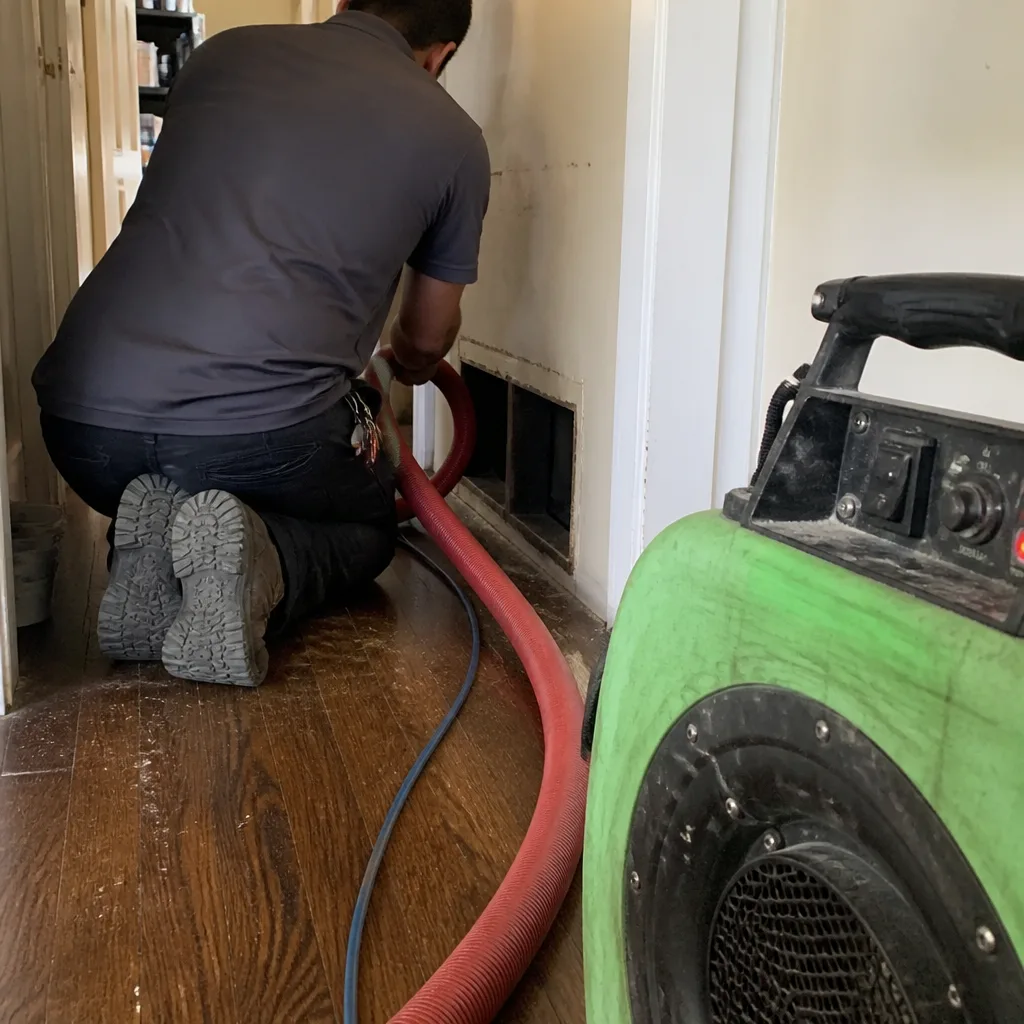
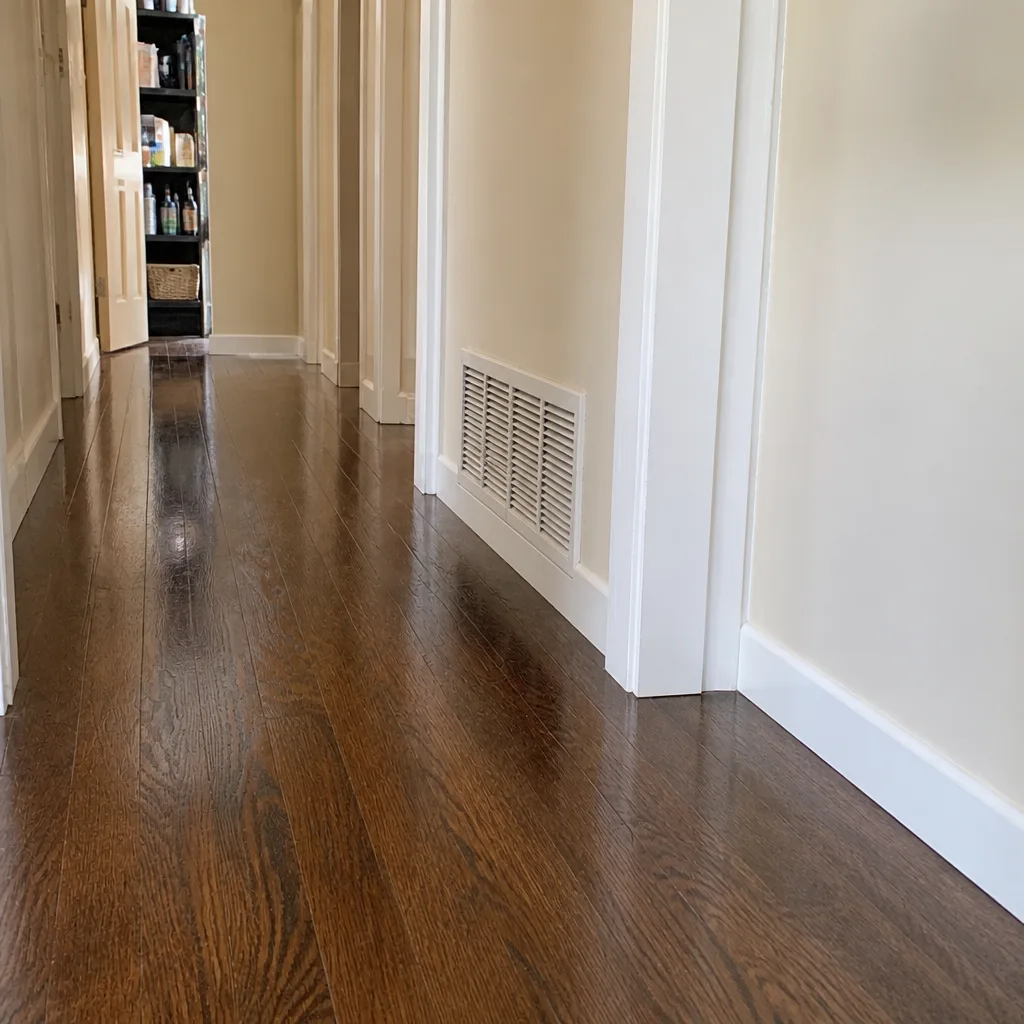
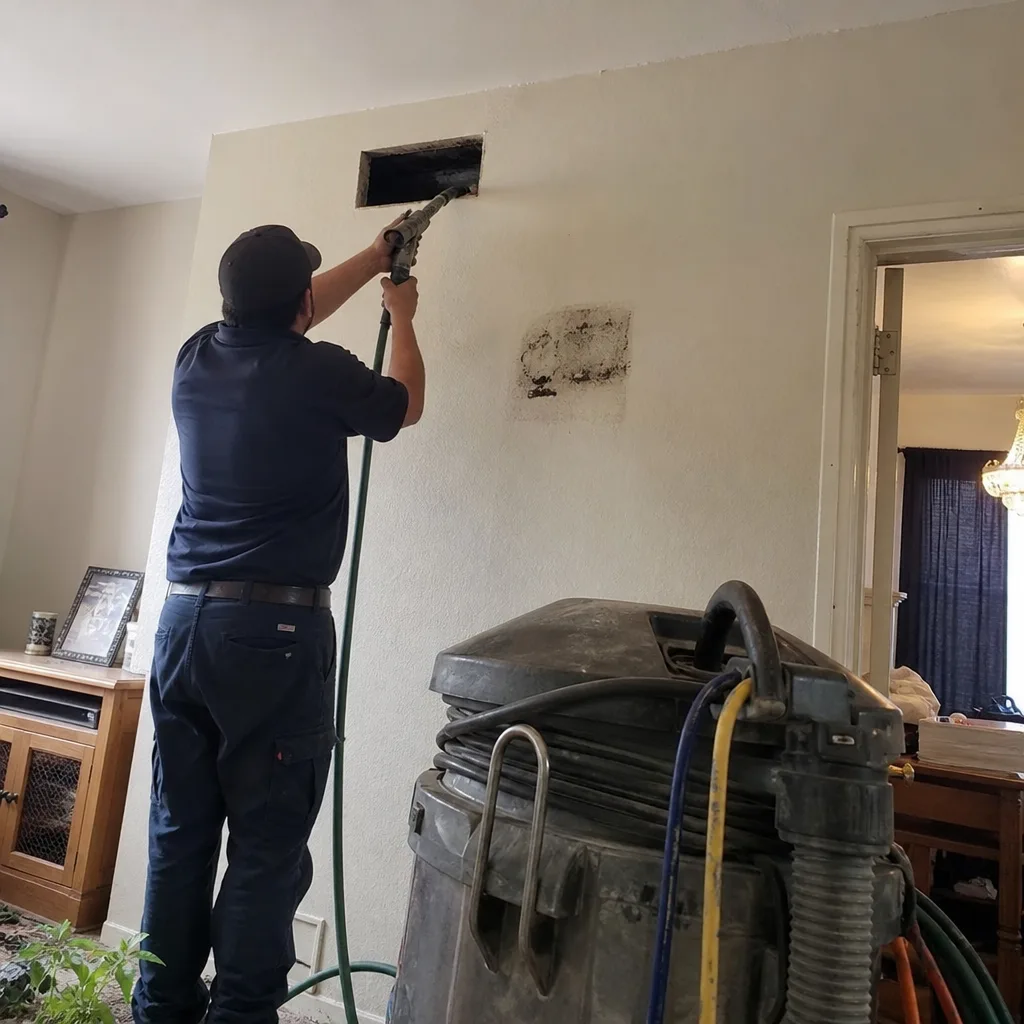
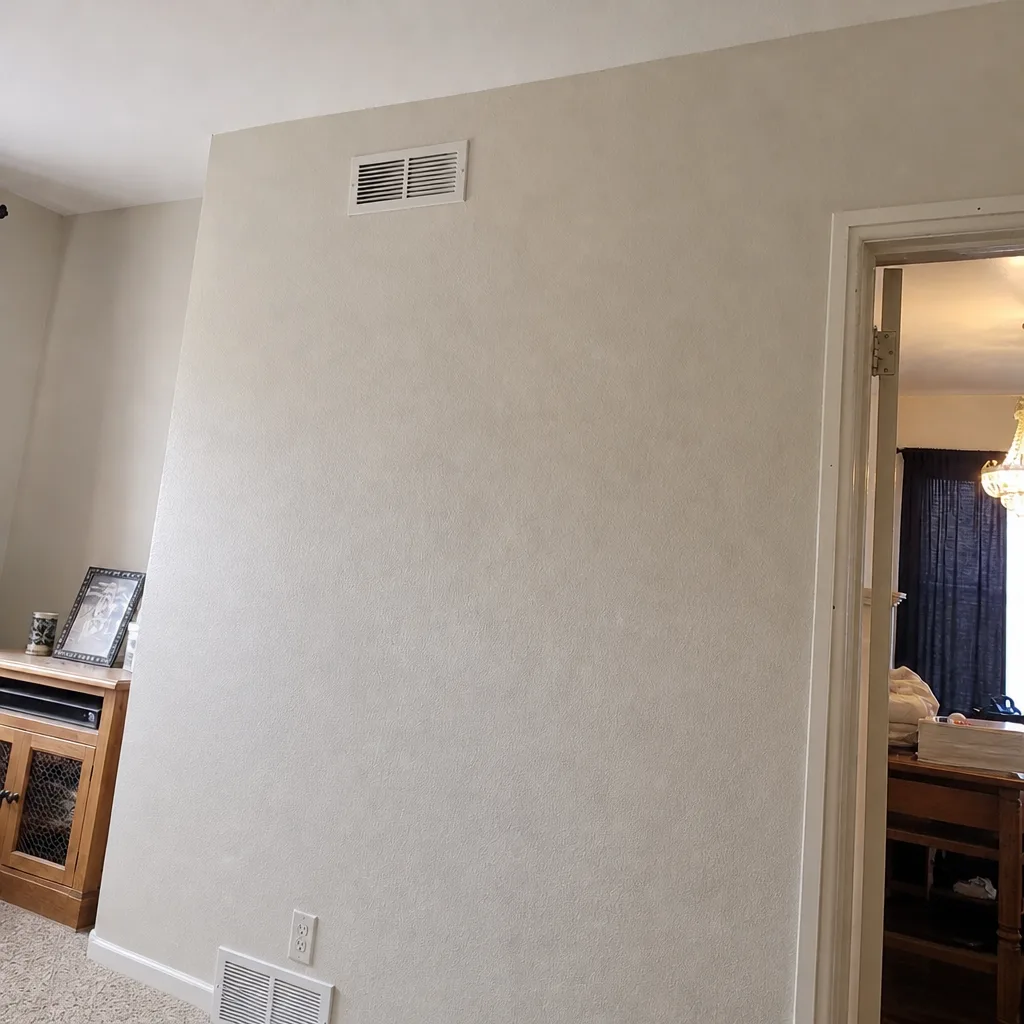
- Ask for before-and-after photos of your own ducts. A real cleaning produces visible change and a camera record of it. If a company won’t show you your ducts, the service likely wasn’t what was promised.
- Ask whether the price is per system or per vent. Per-vent pricing is how low quoted numbers turn into large final invoices. A flat price per system agreed before work starts removes that surprise.
- Ask whether the technician is prepared to identify duct damage. A proper cleaning includes inspecting the system for disconnected runs, crushed flex, and failing seals. Cleaning around a broken duct is wasted money.
That last point matters in Stockton. Ducts that have worked through years of Valley dust and moisture cycling often have failing connections or compressed sections. When we find them, we repair what we find rather than clean around it, and that’s a conversation we have before any work begins.
Why CFM Readings Beat a Visual Inspection
You can’t judge airflow with your eyes. You can judge it with a meter. CFM, or cubic feet per minute, is the volume of air a register moves. Measure it before cleaning and after, and you have objective proof of what changed. Look at a duct and squint, and you have an impression.
Why does this matter for a Stockton home? Because the symptom most people notice first is reduced airflow: a room that never quite heats or cools, a weak register near the end of a long run, or a system that runs longer than it used to. Those symptoms can come from contamination, collapse, or a disconnected run. CFM readings at each register help separate the causes.
- A register with low CFM before cleaning that improves measurably afterward tells you contamination was the restriction.
- A register with low CFM that doesn’t improve points to a duct problem, like a crushed flex section or a disconnected joint, which needs repair rather than another cleaning pass.
- Uneven CFM across the house suggests a balancing or layout issue that existed long before any dust did.
We take register readings as part of the assessment, and we record before-and-after measurements so you can see the change in numbers rather than take our word for it. Visual inspection is still part of the job, using a camera in the duct, but the meter tells the story the eye can’t.
Light-Commercial Ducts in Stockton’s Industrial Corridors
Residential ductwork and light-commercial ductwork are not on the same maintenance clock. In Stockton’s industrial and warehouse-adjacent corridors, where distribution, food processing, and logistics operations run alongside smaller retail and office buildings, the air being pulled into a system carries a heavier particulate load than in a residential neighborhood. That accelerates fouling.
What changes for a light-commercial property:
- Shorter intervals. A commercial system handling a heavier dust load needs inspection and cleaning at more frequent intervals than a house does. Ask for an assessment based on your usage, occupancy, and outdoor environment, and set the schedule from that.
- Larger duct cross-sections. Bigger trunk lines and more terminals mean more surface area, and the equipment has to be sized for it. Residential equipment can’t always reach commercial runs efficiently.
- Containment is non-negotiable. In an occupied building, dislodging dust without containment puts it into a workspace. Abatement Technologies negative-air equipment keeps the work zone isolated so business continues around the cleaning.
- Filtration load. Commercial systems running Honeywell or Aprilaire filtration components should have filter condition reviewed as part of the cleaning visit; a heavily loaded filter is a signal the ductwork upstream may be carrying more than it should.
Property managers in Stockton who schedule ductwork as routine building maintenance avoid the emergency scenario entirely: staff complaints about air quality, a sudden airflow shortfall in summer, or an inspection finding that requires immediate remediation. A scheduled assessment is cheaper than a fire drill.
What a Proper Cleaning Job Looks Like, Step by Step
If you want to know what you’re paying for, here’s the sequence a source-removal job follows. It’s the same process from a single-family home to a light-commercial suite, scaled to the system.
- Walkthrough and assessment. We inspect the system, confirm the number of returns and supplies, note flex vs. rigid runs, look at the furnace and coil area, and check accessible connections for damage. We measure register airflow. This is where we establish what kind of cleaning your ductwork actually needs.
- Protect the home. Floors, corners, and surfaces along the work path are covered with Guardsman protection products. Cleaning a duct system creates traffic and equipment movement, and the house should look the way it did before we arrived when the job is finished.
- Set up containment. Negative-air and HEPA equipment is placed to hold the duct system under negative pressure and capture particulate at the source. This is the step that separates contained cleaning from a dust storm.
- Agitate the full duct wall. Rotobrush rotary brushes are run through each branch and trunk, working the full circumference of the duct, with extraction running continuously. Nikro HEPA-filtered vacuum equipment captures what’s dislodged.
- Clean components and the plenum. The blower, coil area, and plenum are cleaned as part of the system, not skipped because they’re harder to reach.
- Repair what needs repair. Disconnected joints, crushed flex, and failing seals are identified and repaired as part of the visit. Cleaning a leaking duct system is a partial job.
- Document the result. Before-and-after photos of your own ducts and post-cleaning CFM readings are recorded and shared. You know the work was done because you can see it and measure it.
That’s the process. The number of hours it takes depends on the size and layout of your system, and the price for that is set by a written estimate before any work starts, not per vent and not from a coupon figure. We’re happy to walk you through all of this on the phone before you book.
What Air Duct Cleaning Costs in Stockton
A full-system cleaning in Stockton is priced per system, based on the size and layout of your ductwork and the condition we find. Whole-system cleaning for a typical single-family home is estimated by written quote; a light-commercial system is quoted based on the scope of runs and terminals. We don’t publish a coupon figure because a below-market number is almost always the start of a bait-and-switch, where the final invoice bears no resemblance to the quote.
What to expect from an honest quote:
- A flat price per system that’s agreed before any work starts.
- No per-vent pricing and no surprise add-ons once the technician is on site.
- Before-and-after photos of your own ducts as part of the deliverable.
- A written estimate that sets the final price.
If a company quotes you a per-vent number and a low headline, ask what’s included and what happens once they’re inside. Call (855) 263-2873 for an exact quote. Estimates are free.
Common Mistakes to Avoid
- Choosing on headline price alone. A quote that seems too low relative to the size of your Stockton home is usually a teaser that becomes a much larger invoice once the technician is on site. Ask whether the price is per system, flat, and agreed in writing.
- Letting a cheap service “blow” your system instead of clean it. Without agitation and containment, compressed air pushes the dust into your rooms and resettles it in the same ducts. Ask what agitation equipment is used.
- Skipping the system inspection. A crushed flex section in the attic or a disconnected joint behind a wall cavity can be causing the low airflow you’re trying to solve. Cleaning around a broken duct doesn’t fix the problem.
- Ignoring the dryer vent in the same visit. Your dryer vent is a fire hazard waiting to happen. A blocked or lint-compacted vent restricts airflow, overheats the appliance, and creates a fire risk that has nothing to do with your ducts. Cleaning both in one visit makes sense because the same specialized team handles both.
- Assuming your filtration is doing all the work. A good Honeywell or Aprilaire filter is a last line of defense, not a replacement for clean ductwork. If your filter loads faster than it should, the ductwork upstream is telling you something.
- Waiting until you notice the musty smell. In Stockton, the tule fog season is when microbial growth gets its window. Cleaning before the humidity returns is a better plan than cleaning after the smell starts.
- Settling for a visual inspection with no measurement. If a company won’t take CFM readings before and after, and won’t show you before-and-after photos of your own ducts, there’s no evidence the job was done.
See the difference
 Before
 After
 Before
 After
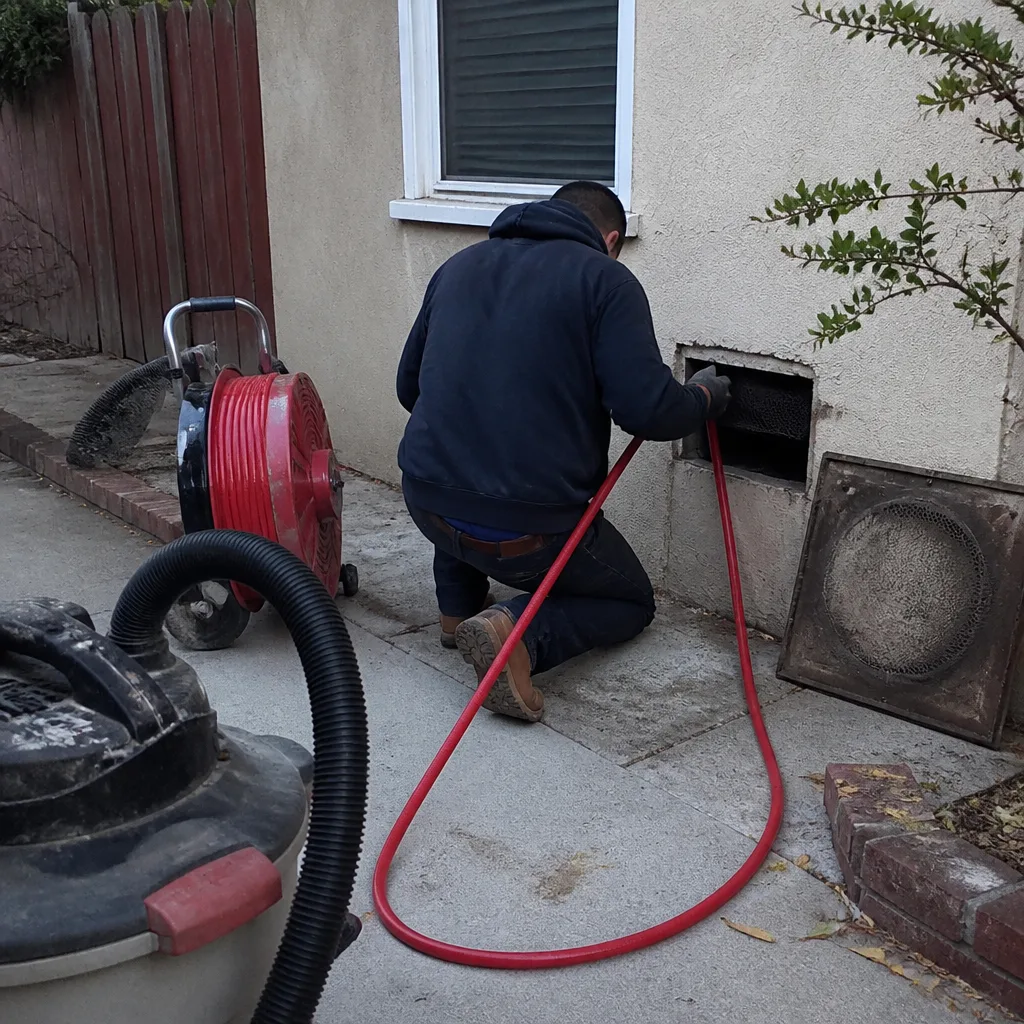 Before
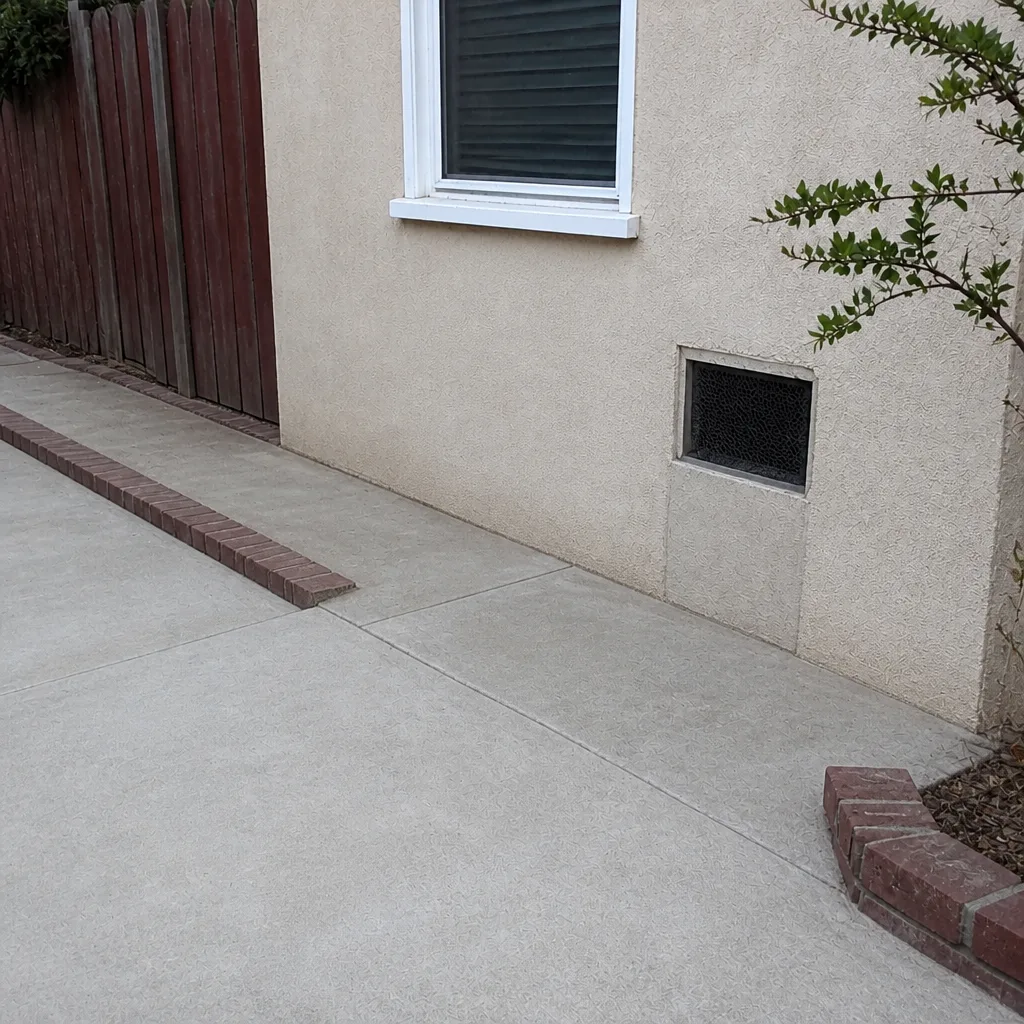 After
When to Call a Professional
Call a professional when the symptom is structural, not seasonal. Reduced airflow to one or more registers, a musty smell that returns every time the system kicks on, visible dust blowing out of supply vents, or a recent renovation that left drywall dust in the system are all reasons to book an assessment rather than a quick pass. For homeowners in Stockton, the best time to schedule is before the tule fog season begins, so a contaminated system isn’t spending the wet months growing. If you’ve bought a home and don’t know the cleaning history of the ductwork, an inspection is the right starting point. Duct Cleaning Stockton offers free estimates in Stockton, and we’ll tell you whether your system needs cleaning, repair, or both. Call (855) 263-2873. We answer 24/7. Fast dispatch from 7am to 7pm, Sunday through Friday.
Frequently Asked Questions
Pricing is per system, set by a written estimate before any work starts, based on the size and layout of your ductwork and its condition. We quote a flat price for the whole system rather than a per-vent number or a coupon figure. Call (855) 263-2873 for an exact quote. Estimates are free.
Because they’re often per-vent teasers that become a larger invoice once the technician is on site, or blow-and-go service that doesn’t agitate or contain the dust. Purpose-built equipment, HEPA containment, and a full system inspection cost more to run than a shop vac and an hour of labor. Ask whether the quote is flat and per system, and whether before-and-after photos are included.
For a typical Stockton home, inspection every couple of years is a reasonable starting point, but the tule fog humidity cycle and proximity to farmland push the cleaning interval shorter for many homes. A home near the eastern foothills or the Delta edges sees a heavier agricultural particulate load than a well-sealed central Stockton home. Let the inspection, the filter loading, and the CFM readings set the schedule rather than a fixed number. Call (855) 263-2873 to schedule an assessment. Estimates are free.
You get before-and-after photos of your own ducts and register CFM readings taken before and after the cleaning. Those are the two pieces of evidence that separate a real source-removal job from a cosmetic pass. If a company can’t provide either, the work likely wasn’t what was promised.
Yes, particularly in the flex-duct systems common to Stockton homes built from the 1970s through the 1990s. The repeated high-humidity stretch followed by dry conditions can leave condensation on cool duct surfaces, and organic particulate already settled there becomes a food source for microbial growth. Cleaning before the fog season starts is the practical approach.
Yes. We service all three linked systems: air duct cleaning, dryer vent cleaning, and air duct repair, all performed by the same specialized team. A dryer vent is one of the leading home fire causes when it’s blocked with lint, and it’s worth cleaning in the same visit as the ducts. Call (855) 263-2873 to book. Estimates are free.
The Bottom Line
Stockton ductwork carries more than ordinary house dust, and the Valley’s tule fog humidity makes the timing of cleaning matter. The equipment matters too: source-removal cleaning with rotary agitation, HEPA containment, and CFM measurements before and after is a different job from a vacuum pass. Purpose-built equipment, not improvised tools, is what removes what’s on the duct wall rather than redistributing it. If you’re near the farmland edges or in an older flex-duct home, prioritize the assessment so you know what your system is carrying. And when a quote comes in low, ask what’s inside it. For a free estimate in Stockton, Duct Cleaning Stockton is ready to help.
Contact
Call Duct Cleaning Stockton at (855) 263-2873 for a free estimate. We answer 24/7. Fast dispatch from 7am to 7pm, Sunday through Friday. We connect homeowners and property managers in Stockton with independent local professionals who use Rotobrush, Nikro, and Abatement Technologies equipment, document their work with before-and-after photos of your own ducts, and set one flat price per system in a written estimate before any work starts. If you’ve noticed reduced airflow, a musty smell, or heavy dust since a renovation, or you just don’t know the cleaning history of your Stockton home, call us. Whether you’re scheduling air duct cleaning, a dryer vent visit, or a duct repair assessment, you can start from the duct cleaning page or just pick up the phone and talk to us. We repair what we find, not just clean around it.
Written by the team at Duct Cleaning Stockton.