
Last updated November 16, 2026
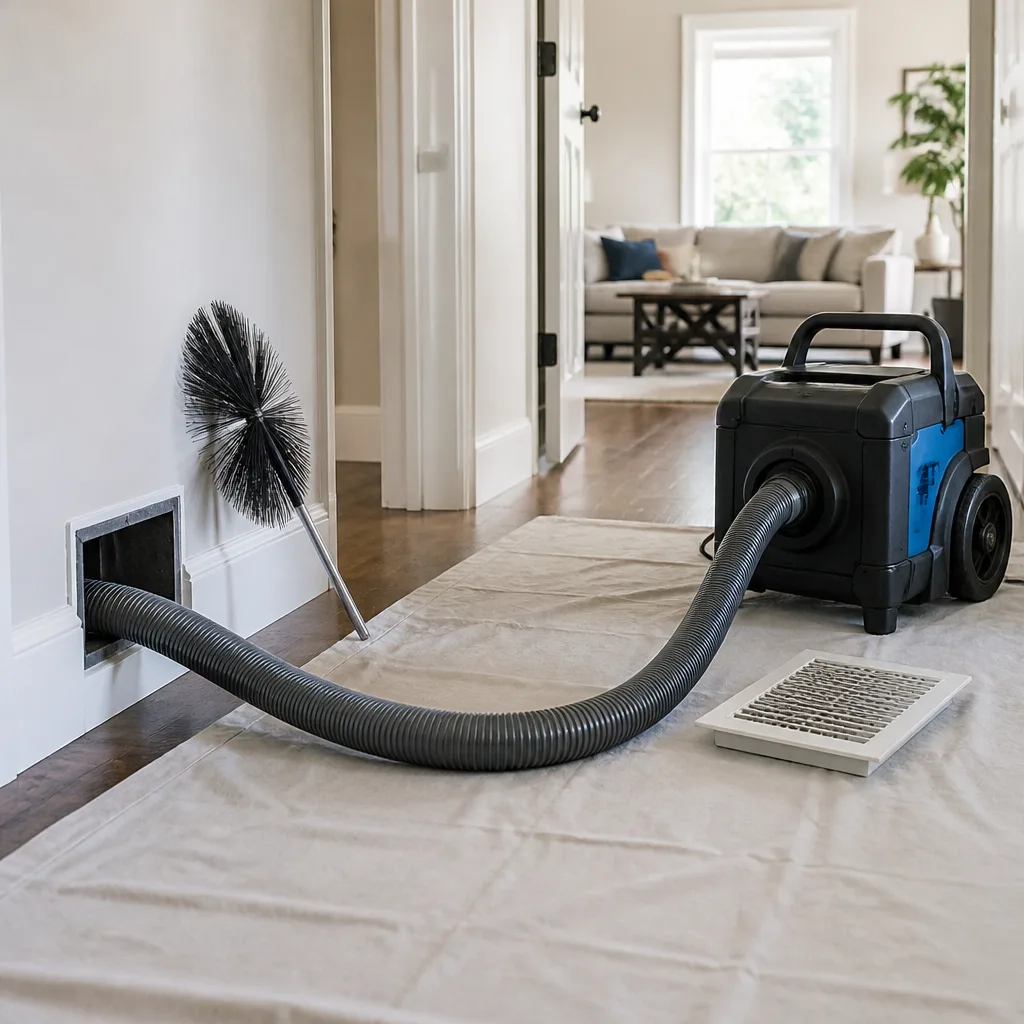 Whole-home duct cleaning
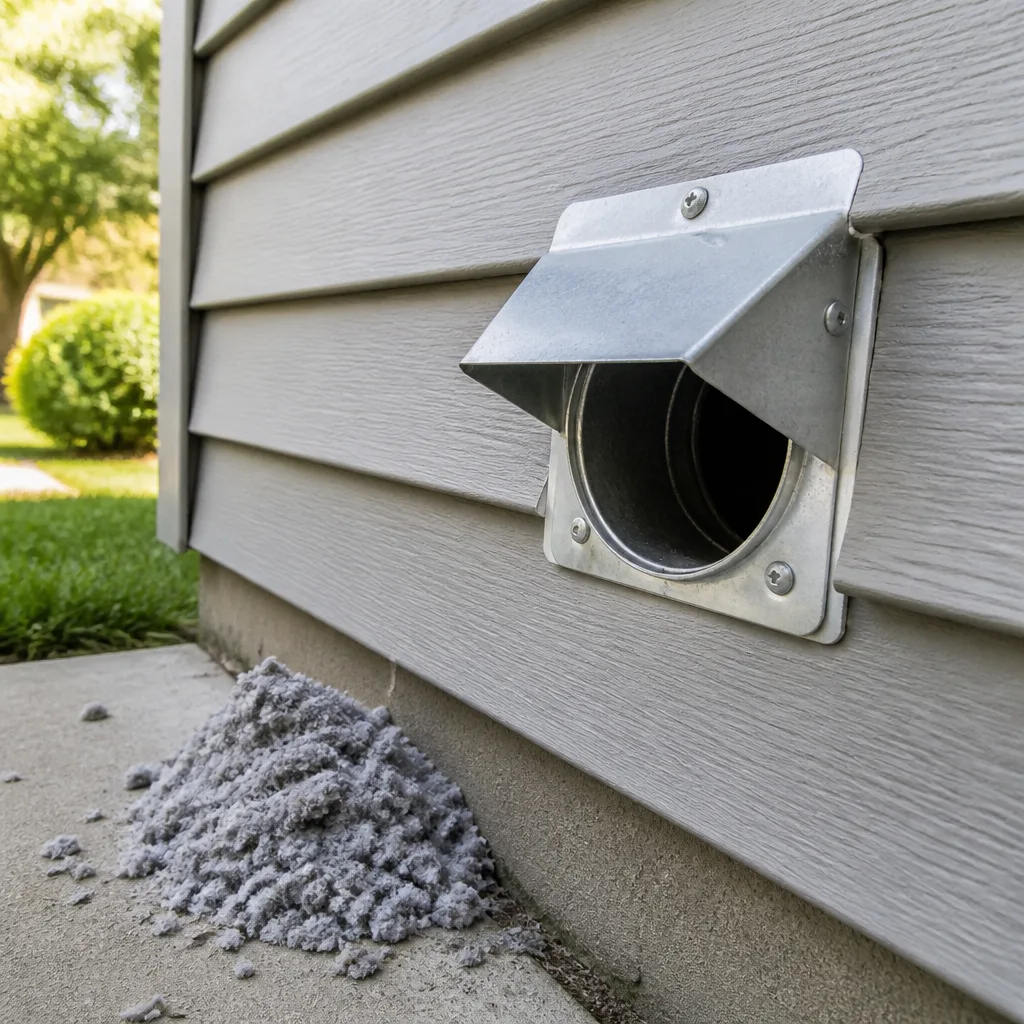 Dryer vent cleaning
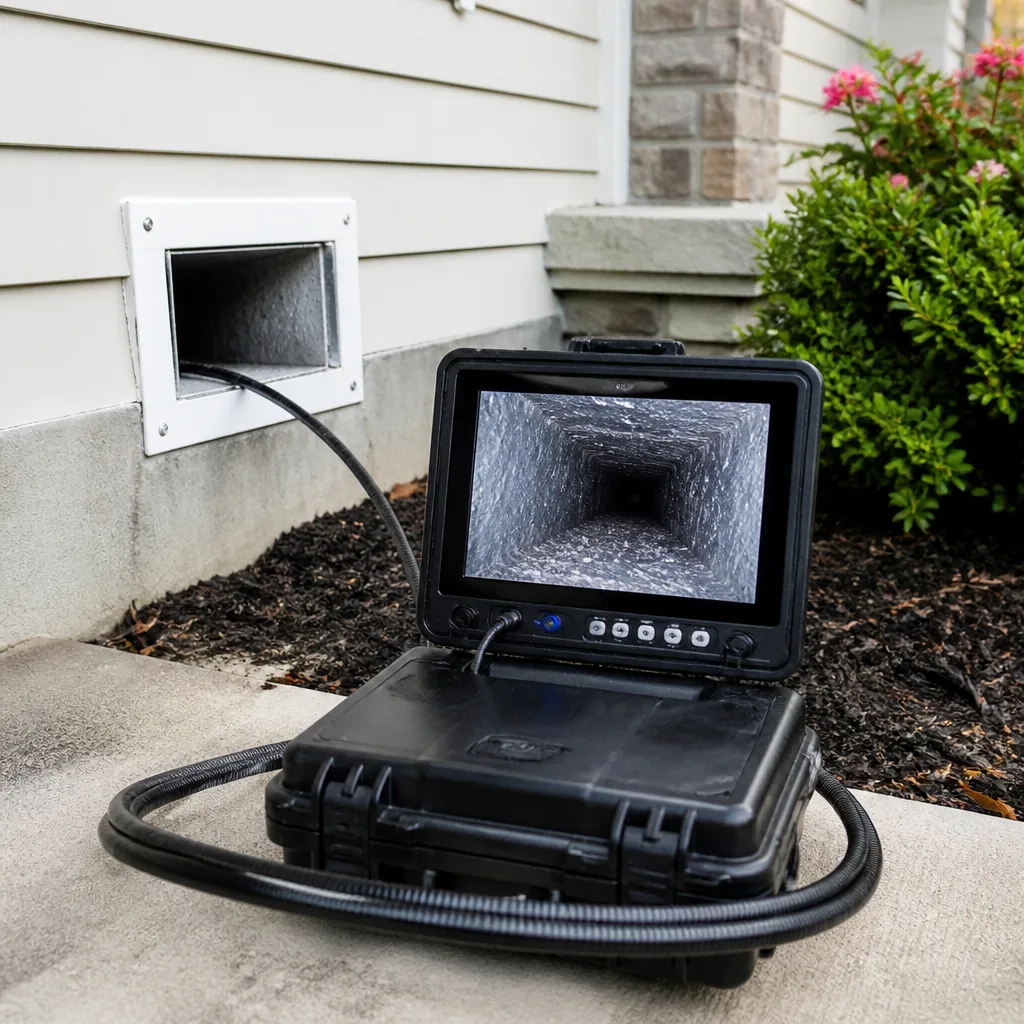 Camera inspection
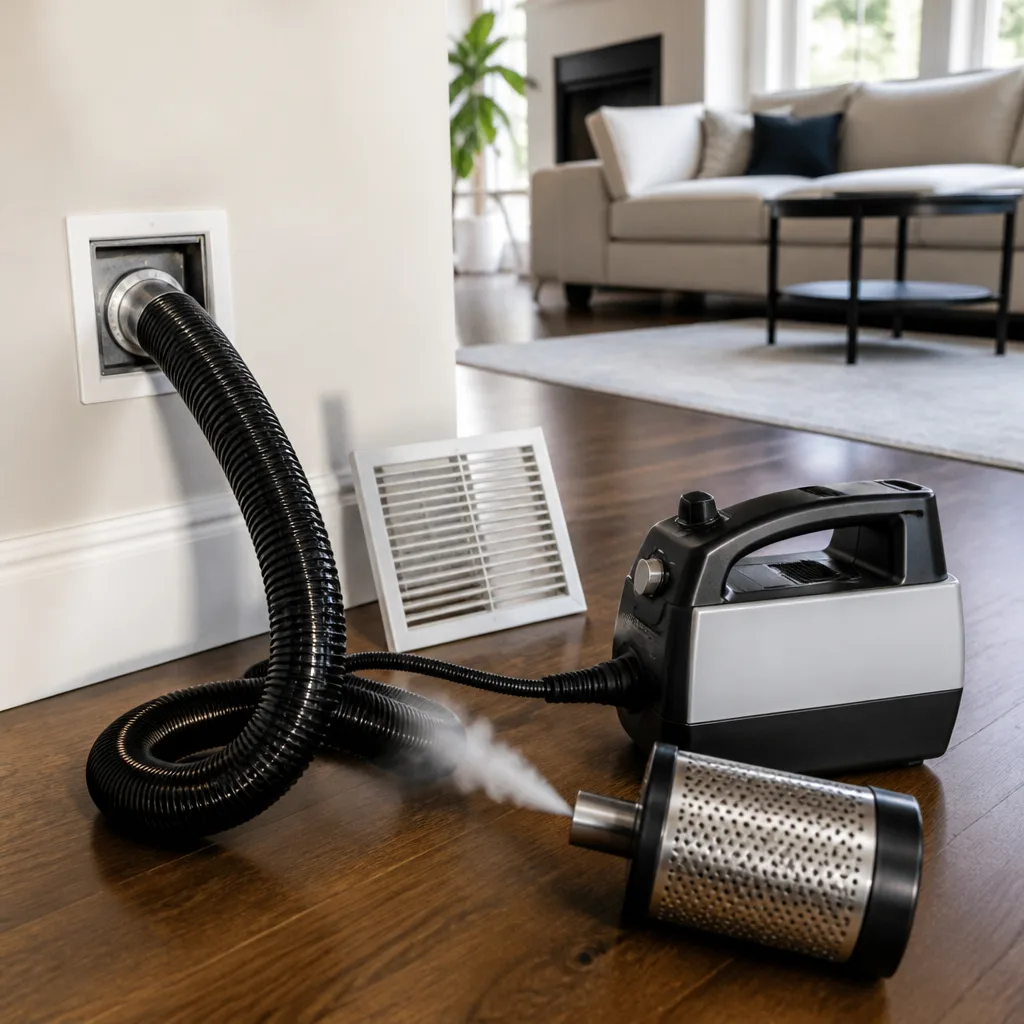 Sanitizing & deodorizing
Whole-system duct and dryer vent check with before-and-after photos - you see exactly what came out of your vents
That "$99 whole-house special" is a bait ad - the real number appears once they are in your hallway, or the "clean" is a shop-vac at the register. We photograph the inside of your ducts before and after instead.
Air Duct Cleaning Troubleshooting in Stockton: Common Problems and How to Fix Them
A musty smell right after a duct cleaning doesn’t mean the job failed. More often it means the technician cleaned the big trunk lines and skipped the flex branch runs where moisture and debris actually collect. We see this in Stockton homes regularly, especially houses with attic ductwork that was added or reworked after the original build. The same goes for weak airflow, dust that returns within weeks, and vents that whistle: each symptom points to a specific mechanical cause inside the system, and each cause needs a different fix. This guide maps the symptom to the cause to the tool that actually solves it, so you can tell a real cleanup from a surface pass before you pay for one.
Quick Answer
Most air duct “problems” in Stockton fall into four mechanical categories: debris blockage, flex duct collapse or disconnection, duct leakage that pulls attic or wall-cavity dust into the airstream, and filtration bypass at the air handler. A proper fix matches the diagnosis, which is why a single generic brush-and-vacuum job rarely solves weak airflow or recurring dust on its own. Odor that persists after cleaning usually means contamination on duct liner, insulation, or the evaporator coil, surfaces a quick pass won’t reach.
Styles & brands we work with
- Whole-home duct cleaning
- Dryer vent cleaning
- Camera inspection
- Sanitizing & deodorizing
Table of Contents
- Symptom-to-Cause Map: What Your Ducts Are Telling You
- Why Is Airflow Weak in Some Rooms?
- Why Do Ducts Still Smell After Cleaning?
- Why Does Dust Come Back So Fast?
- When Does Mechanical Agitation Help, and When Does It Hurt?
- The DIY Check You Can Do at the Register
- When the Problem Isn’t the Ducts at All
- What Duct Repair Actually Looks Like
Symptom-to-Cause Map: What Your Ducts Are Telling You
Before any technician opens a single register, the symptoms you describe already narrow the diagnosis. Homeowners often call us asking for “a cleaning” when the real issue is a duct that came loose behind a closet wall or a return that’s too small for the system. Mapping the symptom first saves money and prevents the kind of cleaning that never fixes anything.
| Symptom | Most Likely Cause | What Fixes It |
|---|---|---|
| Weak airflow to far rooms | Flex duct collapse, crush, or disconnect | Duct repair, sometimes rerouting |
| Musty or dusty smell | Mold on liner, wet insulation, coil contamination | Targeted cleaning, possible liner replacement |
| Dust returns within weeks | Duct leakage pulling attic or cavity debris | Leak sealing plus cleaning |
| Whistling or roaring at registers | Undersized return or high static pressure | Return resizing or filter upgrade |
| Hot or cold spots | Debris in branch runs or blocked registers | Full system cleaning, register check |
| Dust on the filter face but not past it | Filter bypass at the air handler | Filter housing sealing |
Every one of these causes looks similar when you’re standing in a hallway holding a flashlight. In our experience, the diagnosis is what separates a cleaning that lasts from one you regret. That’s why we look at the whole airflow chain at Duct Cleaning Stockton, from return grille to supply boot, before quoting a job.
Why Is Airflow Weak in Some Rooms?
Weak airflow in the back bedroom or the room over the garage is rarely a cleaning problem alone. When a room consistently underperforms while the rest of the house feels fine, the cause usually sits in the branch duct that feeds it. There are four typical culprits, and each calls for a different response.
- Collapsed or crushed flex duct. Flex runs that got stepped on in the attic, pinched at a truss, or kinked at a sharp turn lose most of their capacity. Cleaning won’t restore the shape; the run has to be replaced or rerouted.
- Debris blockage. Construction dust, insulation fibers, or a rodent nest can pack a branch duct. This is where professional agitation and HEPA extraction do their job.
- Disconnected joint. A boot that separated from the flex at the register, or a takeoff that pulled loose at the trunk, dumps conditioned air into the attic. You’ll feel weak flow at the vent even though the system is running hard.
- Undersized return. A single return serving a large open floor plan starves the system. No amount of cleaning fixes this; the return has to be resized.
One more factor that matters in Stockton: hot attic air. Summer attic temperatures here push well above outdoor air, so a duct that runs through the attic and loses its insulation or gets a kink during a roofing job can deliver warm air even when the airflow itself seems fine. If the room cools slowly but the vent feels strong, insulation is worth suspecting.
- Walk the house and note every room that underperforms.
- Check each supply register for flow with the system running.
- Note whether the weak rooms share a trunk line or sit over the garage or on the sunny side.
- Have the attic or crawlspace inspected for kinked, disconnected, or uninsulated flex runs.
That sequence tells the technician exactly what to open up first, so you’re not paying for a full cleaning when the real answer is one crushed branch duct.
Why Do Ducts Still Smell After Cleaning?
A musty smell that survives a cleaning almost always points to a surface the brush couldn’t reach. Bare galvanized sheet metal doesn’t hold odor the way porous materials do. When the smell persists, the source is usually one of four things: mold on the interior duct liner, wet or degraded insulation at a joint, contamination on the evaporator coil, or a damp flex duct soaking up moisture from a humid crawlspace.
Interior duct liner is the most common culprit we find. The liner is a fibrous acoustic material bonded to the inside of the duct. When humidity spikes and the liner stays damp, mold colonizes the fibers, and brushing just smears the growth. A proper answer involves either liner replacement or a verified containment and treatment protocol. That’s where HEPA-filtered air duct cleaning with negative-air equipment matters. Using Abatement Technologies containment tools, we hold the dust and any airborne spores inside the working zone rather than letting them blow through the house. The same HEPA standard used in remediation work is the right standard for a house that’s already had moisture trouble.
Coil contamination is the other frequent answer. An evaporator coil gets wet every time the system cools, which makes it a perfect humidity trap. Debris, dust, and biofilm build on the fins, and no amount of duct vacuuming removes it. The coil has to be cleaned directly.
- Mold on duct liner: replacement or professional treatment, not a brush pass.
- Wet insulation at joints: moisture source has to be found and corrected first.
- Coil buildup: the evaporator has to be cleaned separately from the ducts.
- Damp flex duct in a humid crawlspace: vent the crawlspace or reroute the run.
If the smell came back within a few weeks of a cleaning, ask specifically what surfaces were touched. If the answer is “the ducts were vacuumed,” the liner and the coil were probably never in scope.
Why Does Dust Come Back So Fast?
Dust that reappears within a couple of weeks of cleaning almost always means the ducts are pulling outside debris into the system. There are two mechanical explanations, and they’re often present together.
Duct leakage. Supply ducts in the attic or wall cavities run under positive pressure, and returns run under negative pressure. A return leak pulls attic air, fiberglass particles, and pest debris straight into the airstream. You clean the ducts, the system runs, and the leak reloads them. The fix is sealing the return side, not cleaning the same duct twice.
Filter bypass. The filter is supposed to be the only door debris can use. If the filter housing is too large for the filter, or the filter frame is bent, or the slot doesn’t hold the filter tight, air goes around the edges instead of through the media. That unfiltered air carries dust into the plenum and then into every branch. A filter that looks dirty on the front but clean at the edges is telling you exactly this. Sealing the housing is the answer, and upgrading to a Honeywell or Aprilaire filter cabinet gives you a properly gasketed frame where the filter can’t slide out of position.
One more cause worth mentioning: leaky return ducts in a garage wall or crawlspace can pull in concrete dust, insulation fibers, or soil particles. In Stockton’s older neighborhoods, where crawlspaces under ranch homes are common, that’s a frequent diagnosis. The cleaning is only step one. Sealing the leak and fixing the bypass is what stops the dust from coming back.
When Does Mechanical Agitation Help, and When Does It Hurt?
Mechanical agitation, the spinning brush or air whip that dislodges debris from the duct walls, is the most effective tool in a professional cleaning. It’s also the most misused. Whether it helps or harms depends entirely on what the ducts are made of.
Where agitation helps. Rigid galvanized sheet-metal ducts, board ducts with a hard interior surface, and metal trunks with heavy dust all benefit from a rotary brush pass. The Rotobrush rotary system we use combines mechanical agitation with simultaneous extraction, which keeps dust from being stirred up and left to settle back on the walls. In a properly contained job, this is the difference between actually removing the debris and just moving it. Nikro HEPA-filtered vacuum equipment pulls the dislodged material out at the source.
Where agitation hurts. Older flex duct, internal liner that’s already degraded, and ductboard with visible fiber loss can be damaged by aggressive brushing. A spinning brush on failing liner can shred the surface and send fibers downstream. On those systems, the answer is a lower-pressure air sweep with HEPA capture, or a recommendation to replace the liner or the run altogether. Inspecting before touching is not optional.
- Look inside the ducts with a camera at two or three registers.
- Identify the duct material: metal, board, flex, or lined.
- Check liner condition for fiber loss, tears, or mold.
- Choose the tool: rotary brush for solid surfaces, air sweep for fragile ones.
- Replace what’s failed rather than clean what can’t hold up.
When a technician recommends replacing a damaged branch duct instead of cleaning it, that’s usually a sign the diagnostics were done properly. Cleaning fragile ducts is how you end up paying twice.
The DIY Check You Can Do at the Register
Homeowners can run one useful diagnostic before calling anyone: measure static pressure at a supply register with a smartphone manometer app. You don’t need special tools, just a phone, a piece of tape to seal around the phone’s mic, and a few minutes.
- Close every register in the house except the one you’re testing.
- Run the system on high fan.
- Hold the phone’s microphone against the register grille with the sensor edge taped tight against the frame so air can’t escape around it.
- Record the reading.
- Repeat at two or three other registers and compare.
You’re not looking for a specific number so much as for consistency. If one register reads noticeably different from the rest, that branch has a delivery problem. If every register is weak, the bottleneck is at the trunk, the air handler, or the filter. If the reading at the air handler itself is unusually high, the filter is likely clogged or the return is undersized.
That reading gives you a starting point. It won’t tell you whether the problem is debris, a leak, or a kink, but it will tell you the difference between “some rooms are weak” and “the whole system is starving.” Either answer is useful when you book an inspection. It also protects you from paying for a full cleaning when the real issue is a filter that needs changing.
When the Problem Isn’t the Ducts at All
Sometimes the duct system is fine and the real trouble is upstream or downstream in the HVAC equipment. Knowing the difference saves you money.
- Blower wheel buildup. Dust sticks to the blower fins, cutting airflow and pushing debris downstream. The blower has to be pulled and cleaned.
- Evaporator coil blockage. A clogged coil restricts airflow and needs direct cleaning.
- Undersized return. A house with one small return serving a large open floor plan will always feel weak, no matter how clean the ducts are.
- Failing blower motor or capacitor. A motor running at reduced speed delivers weak airflow to every register. An HVAC tech has to test it.
In our work across Stockton, we’ve learned to look at the whole airflow chain. That’s why our three-service scope covers air ducts, dryer vents, and duct repair under one specialized team. If the air handler needs attention beyond that scope, we tell you. Better to know what’s actually limiting the system than to spend money on a cleaning that can’t solve the root cause.
What Duct Repair Actually Looks Like
Duct repair is the part of the job most homeowners don’t know exists until a technician points it out. A disconnected boot, a crushed flex branch, a torn takeoff at the trunk, or a return duct that’s separated from the plenum all fall under this scope. The repair is usually straightforward once it’s identified, but finding it requires access to the attic, crawlspace, or interior wall cavity.
What gets repaired most often. Flex duct crushed at a truss, a boot that pulled away from the ceiling or wall opening, takeoffs that separated from the metal trunk, and duct runs that were never properly strapped. On older Stockton homes, we also find disconnected returns in attics where the original install was rushed.
What proper repair involves. Reconnecting the joint and sealing it with mastic or foil tape rated for the application, replacing crushed sections of flex, and strapping runs so they hold their shape. When a run was undersized from the start, resizing it is worth discussing. After repair, the system has to be retested to confirm the flow is restored.
Why it matters. A disconnected return duct in an attic pulls in insulation fibers, pest debris, and attic air. The air handler then pushes that material into every room. Cleaning is pointless until the repair is done, because the leak reloads the system the moment the fan starts. This is why repair and cleaning belong in the same conversation.
If your system has leaks, crushed runs, or a failed liner, duct repair is the honest answer. Not more cleaning. The difference comes down to which one actually fixes the airflow.
Common Mistakes to Avoid
- Cleaning only the trunk and skipping the branches. The trunk lines carry more cubic feet per minute, but the branch runs hold most of the dust and moisture. A partial job is why some homeowners still smell mustiness after paying for “a cleaning.”
- Choosing the cheapest coupon offer. A coupon price usually buys one pass with a shop vac or leaf blower and no containment. The dust goes into the air and back into the ducts. Purpose-built equipment, not improvised tools, is what makes the job do anything.
- Letting a technician skip the liner inspection. Fragile liner needs different handling than metal duct. A technician who goes straight to the rotary brush without a camera check is risking damage to the surface you can’t see.
- Ignoring the filter housing. A filter that slides out of position is bypassing the air handler. Sealing the housing or upgrading to a properly gasketed Honeywell or Aprilaire cabinet is often the simplest fix on the whole list.
- Cleaning before repairing. If a duct is disconnected or crushed, the cleaning is wasted until the repair is done. Diagnose first, then clean.
- Treating a return sizing issue as a cleaning issue. When the return is undersized, the answer is resizing it, not cleaning the ducts again. Stockton homes with wide open floor plans and a single small return run into this often.
- Letting the dryer vent go unaddressed. Lint buildup in the dryer vent is a leading home fire cause. If the ducts are being cleaned, the dryer vent is worth doing at the same time since it runs the same air-moving logic.
One more practical note: protecting the home during the job isn’t optional. Floor coverings and register framing keep drywall dust and debris out of the living space. Guardsman surface-protection products are the standard we use on-site for exactly this reason. Trash bags and drop cloths aren’t the same thing.
See the difference
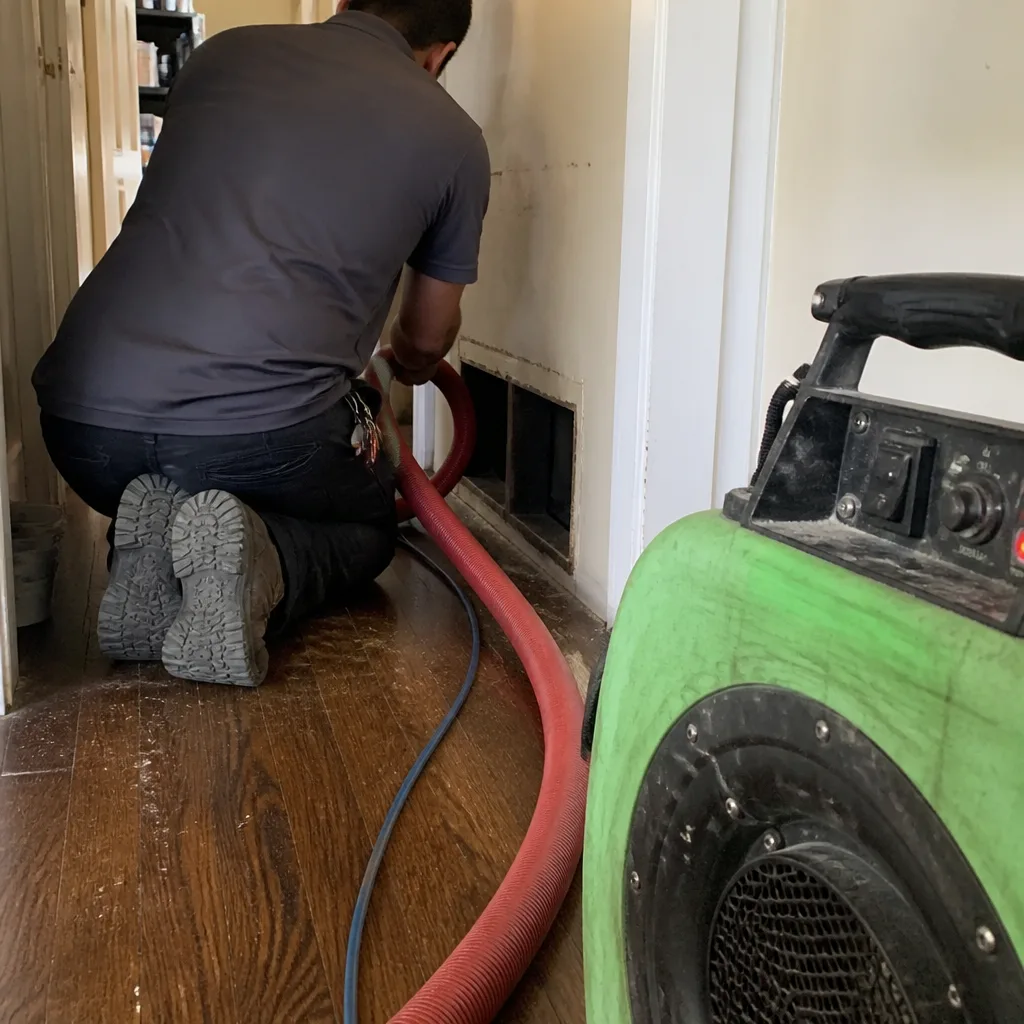 Before
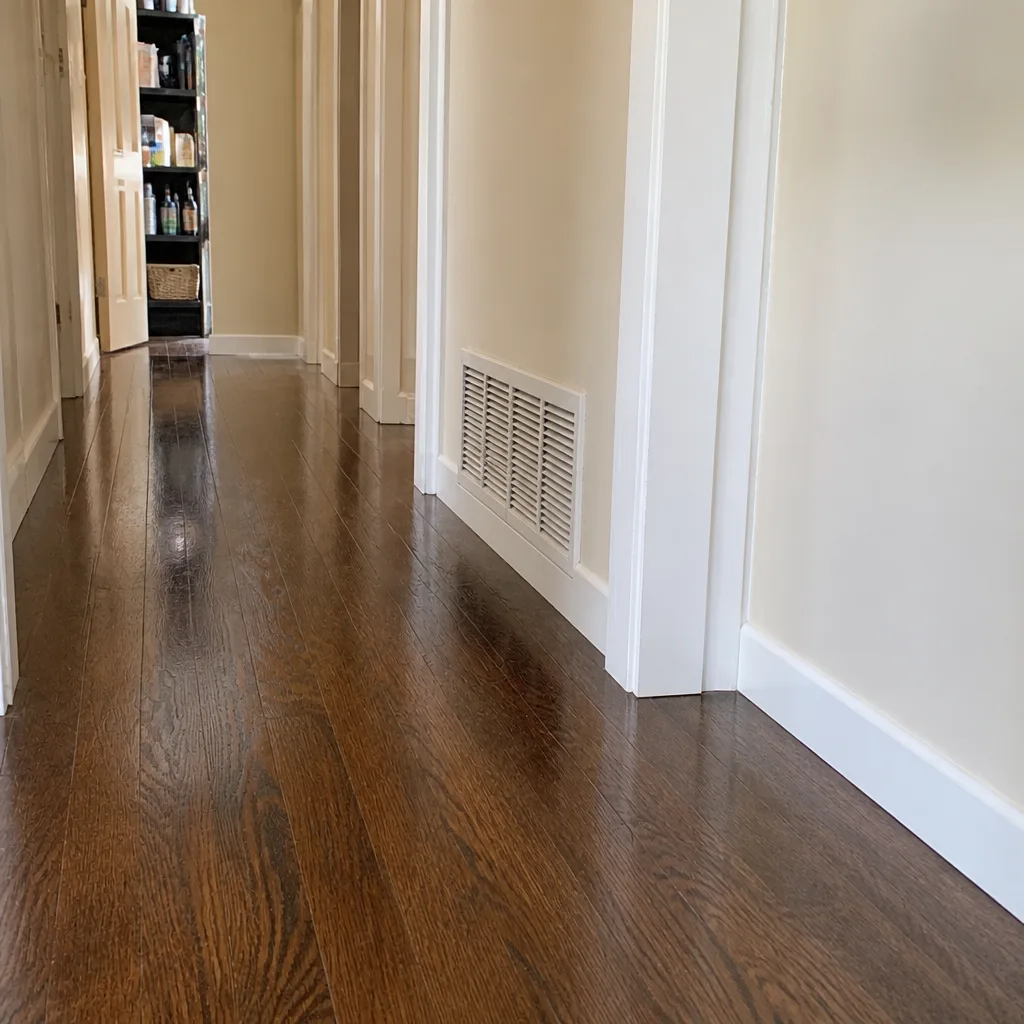 After
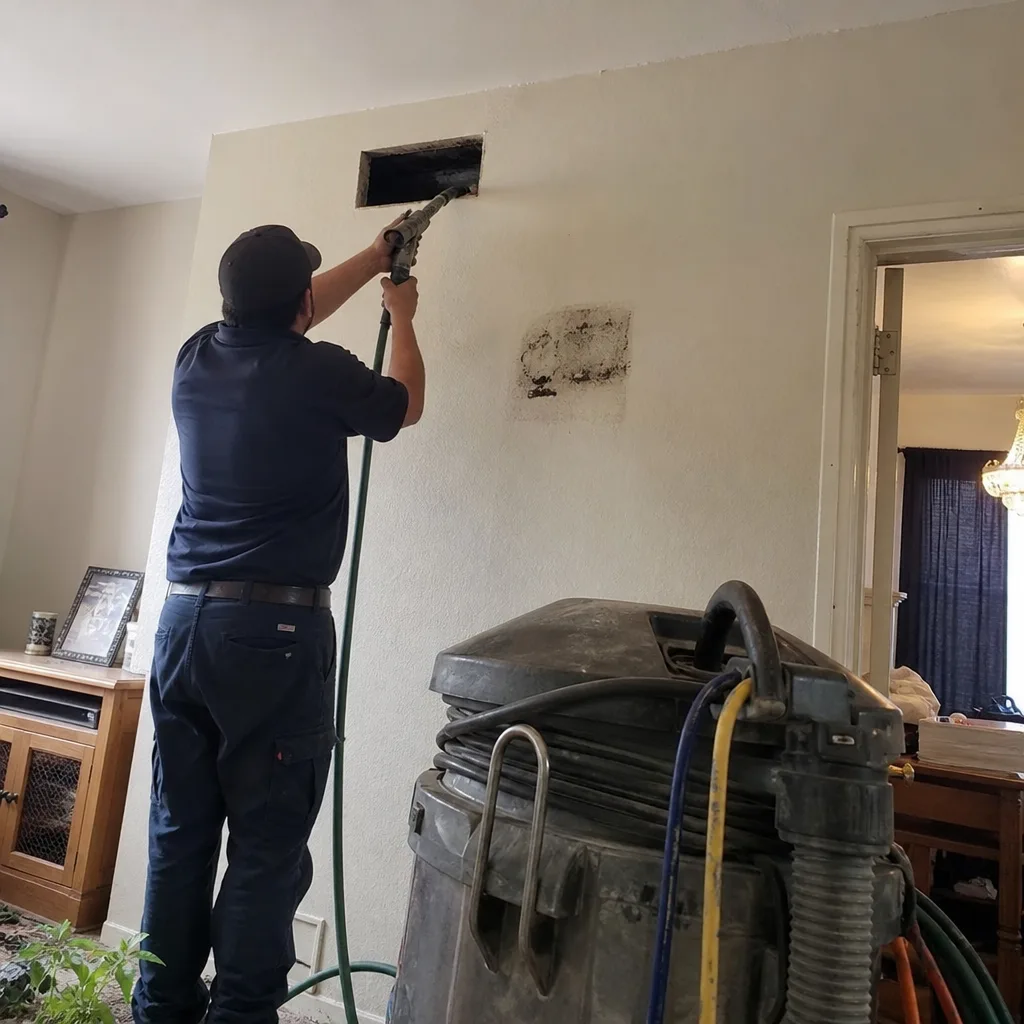 Before
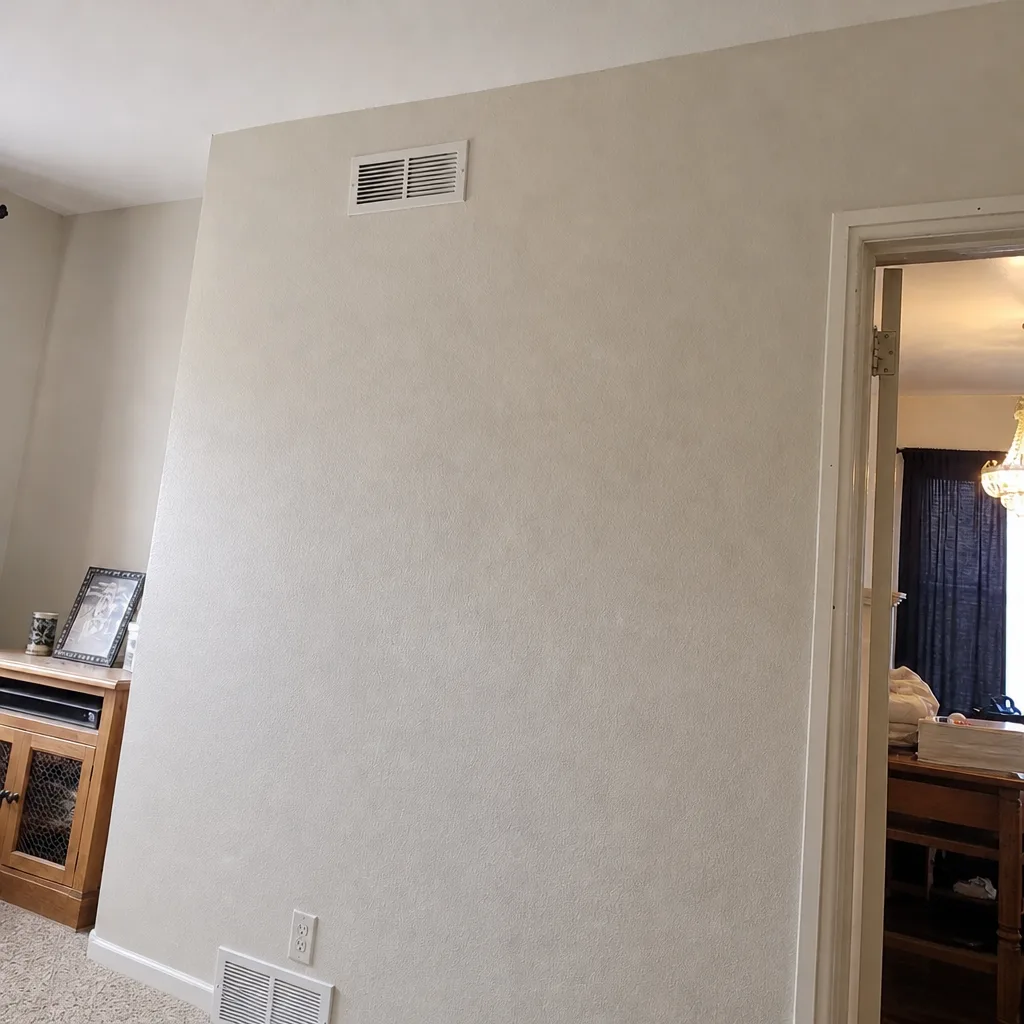 After
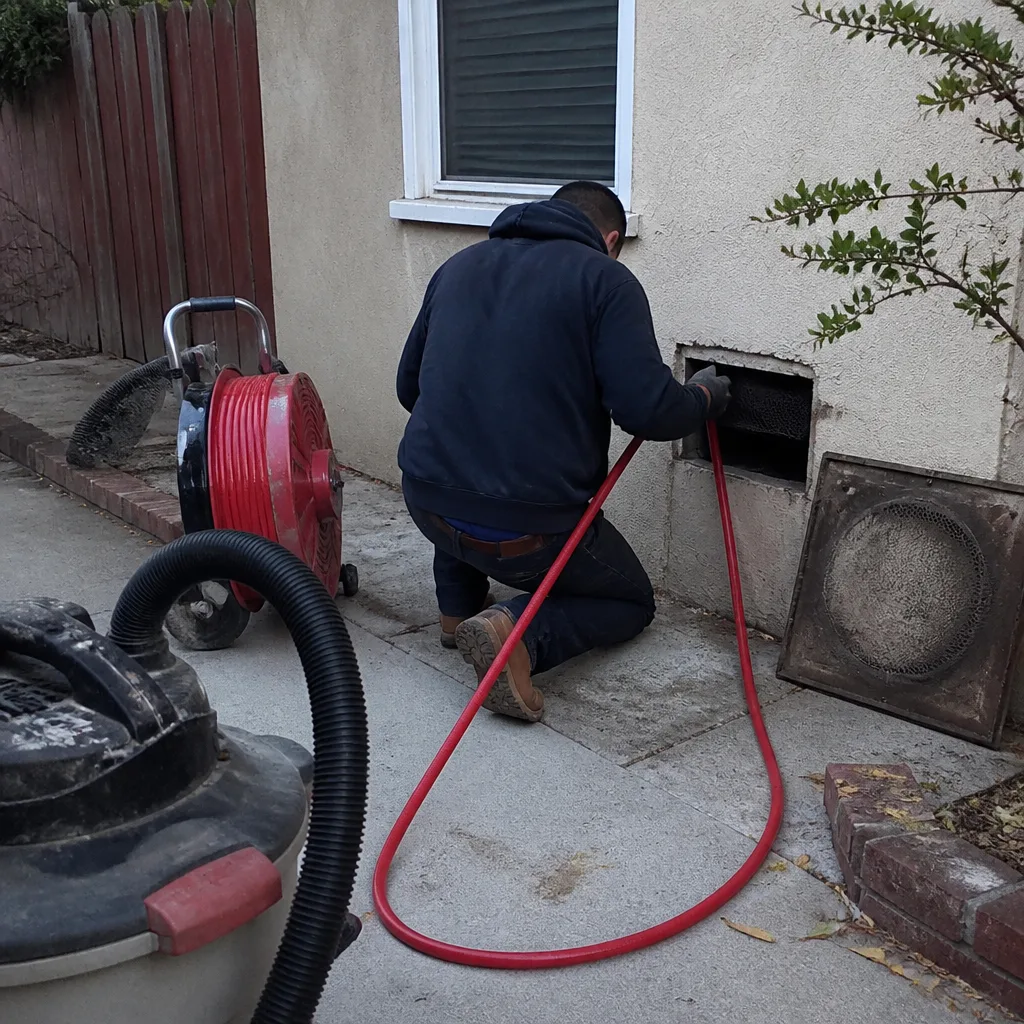 Before
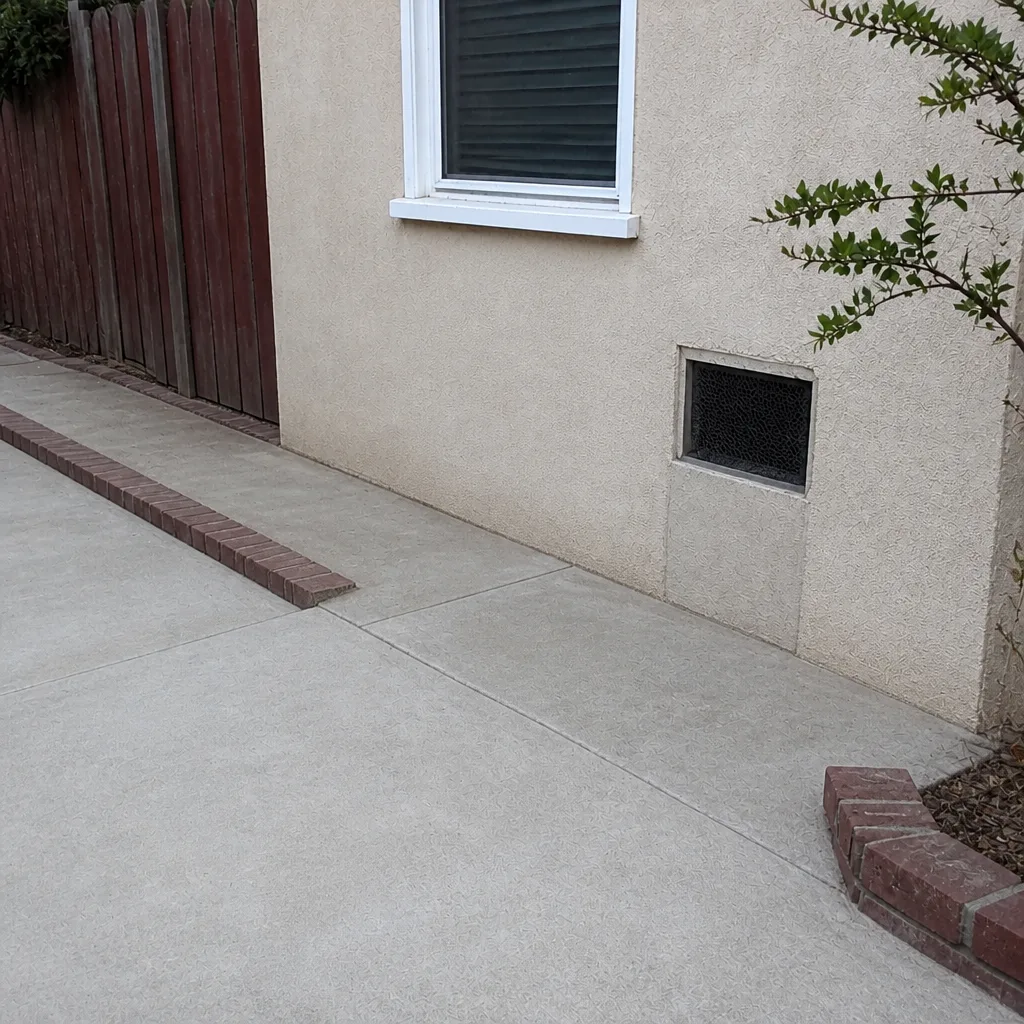 After
When to Call a Professional
Some diagnostics are safe to do yourself, and some very clearly aren’t. Call a professional when you notice any of the following: the smell persists after cleaning; dust reappears within weeks; airflow is weak in two or more rooms after a filter change; you’ve had a recent renovation or water intrusion; the system has never been inspected at the registers; or you suspect the dryer vent is restricted. Electrical shock hazards at the air handler and the risk of damaging flex or liner duct with the wrong tool mean this isn’t a homeowner’s job beyond the register-level static pressure check. Duct Cleaning Stockton offers free estimates in Stockton. Our technicians have up to experience and use Rotobrush, Nikro, and Abatement Technologies equipment on every job. Call (855) 263-2873. We answer 24/7. Fast dispatch from 7am to 7pm, Sunday through Friday.
Frequently Asked Questions
The most common cause is mold on the interior duct liner or contamination on the evaporator coil, neither of which a brush-and-vacuum pass reaches. Stockton’s summer humidity and the way attic ductwork heats up during the day create ideal conditions for moisture to accumulate in liner and insulation. Resolving the smell means replacing or treating the liner and cleaning the coil directly. Call (855) 263-2873 for an exact quote; estimates are free.
Check the filter first. If it looks dirty on the supply-facing side but clean at the edges, air is going around the filter, and the housing needs sealing. If the filter is dirty evenly and the ducts still reload quickly, the leak is on the return side, pulling attic or cavity air into the system. Call (855) 263-2873 for an exact quote; estimates are free.
Only if the weak room’s branch duct is blocked by debris. If the run is crushed, disconnected, or undersized, cleaning won’t restore flow, and duct repair or resizing will. Checking the actual branch is the only way to know which it is. Call (855) 263-2873 for an exact quote; estimates are free.
Because the ducts are reloading from a leak, a filter bypass, or a disconnected return duct. Cleaning removes what’s in the ducts; it doesn’t stop new debris from entering. Older ranch homes in Stockton often have crawlspace or attic return leaks that reload the system within weeks. Call (855) 263-2873 for an exact quote; estimates are free.
Yes, if the ducts have fragile interior liner or ductboard with fiber loss. On solid sheet-metal duct, the rotary brush is the right tool. On older lined or flex duct, a lower-pressure air sweep with HEPA capture is safer, and sometimes the run has to be replaced instead of cleaned. Call (855) 263-2873 for an exact quote; estimates are free.
Most homes benefit every three to five years, sooner after a renovation, water intrusion, pest issue, or new construction. Homes with pets or occupants with allergies often do better on the shorter end of that range. Cleaner than that is optional; dustler is usually a sign of a leak or bypass to find, not a cleaning schedule to shorten. Call (855) 263-2873 for an exact quote; estimates are free.
A cleaning removes debris from the duct walls. A repair reconnects, replaces, or realigns duct sections that have separated, crushed, or lost insulation. They address different problems, and doing a repair without cleaning (or the reverse) usually leaves the system half-fixed. Call (855) 263-2873 for an exact quote; estimates are free.
Because the cheap quote usually covers one pass with improvised equipment, no containment, and no liner or coil inspection. A low figure that turns into a bigger invoice once the technician is on-site is the classic bait-and-switch pattern. We set one flat price per system, agreed before work starts, with no per-vent pricing, and we hand you before-and-after photos of your own ducts so you can verify the work. Free estimate, written before the job. Call (855) 263-2873 for an exact quote; estimates are free.
The Bottom Line
Weak airflow, persistent mustiness, and dust that reappears within weeks aren’t random. Each points to a specific mechanical cause, and each cause has a specific fix. A crushed flex duct needs repair, not cleaning. Mold on duct liner needs replacement or treatment, not a brush pass. Fast-returning dust usually means a leak or a filter bypass, not a dirty system. The right next step is proper diagnostics with a camera, containment with Abatement Technologies equipment, and HEPA-filtered extraction with Nikro or Rotobrush tools. If the system needs repair, repair it. Cleaning a broken system just wastes money. The registers won’t lie, and a static pressure reading at the vent gives you the first data point.
If you’ve tried the register check and the smell is still there or the dust keeps coming back, it’s time for a professional inspection. Duct Cleaning Stockton serves Stockton with a three-service scope: air duct cleaning, dryer vent cleaning, and duct repair. We use commercial-grade equipment, protect your floors with Guardsman products, and give you before-and-after photos of your own ducts. One flat price per system, agreed before work starts.
Call (855) 263-2873 for a free estimate. We answer 24/7. Fast dispatch from 7am to 7pm, Sunday through Friday.
Written by the team at Duct Cleaning Stockton.